

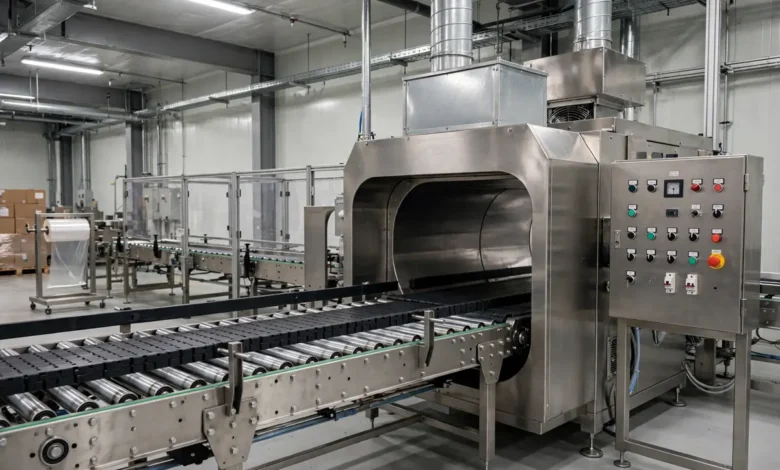
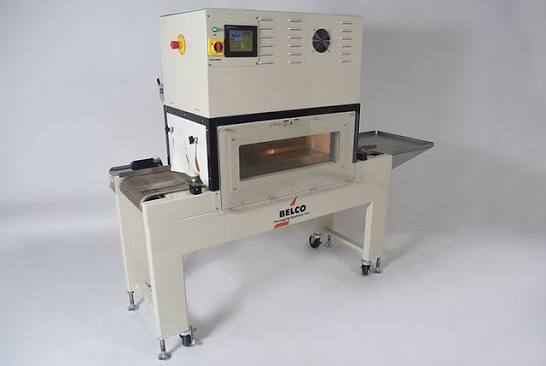
Packaging equipment relies on synchronized conveyor systems to move products through sealing and heat-shrinking processes. Within these systems, conveyor belts are wear components that require replacement after extended operation to maintain production accuracy and equipment performance. A Belco tunnel conveyor assembly uses model-specific belts engineered to operate with designated shrink tunnel equipment.
The Belco tunnel Belt STC2016 (Manufacturer SKU 105233.X) is classified as a shrink machine replacement component designed for the Belco STC2016 packaging system. Machine Parts Toolbox lists this component as an OEM replacement part within its shrink machine parts category for Belco equipment.
Overview of the Belco Tunnle Conveyor System
A Belco tunnel packaging system combines sealing and shrink tunnel operations within a single production unit.
The conveyor assembly performs several functions:
- Product transportation
- Continuous package movement
- Heat tunnel positioning
- Production line synchronization
- Consistent conveyor speed
The tunnel belt remains one of the primary wear components during continuous operation.
STC2016 Belt Specifications
The listed replacement component includes:
- Manufacturer Model: STC2016
- Manufacturer SKU: 105233.X
- Product Category: Shrink Machine Parts
- Machine Brand: Belco
- Unit of Measure: Each
Selecting the correct replacement belt helps maintain compatibility with the original conveyor assembly.
Conveyor Belt Function
Within a Belco tunnel, the conveyor belt transports products through controlled heating zones.
Its operational responsibilities include:
- Maintaining product alignment
- Supporting continuous material flow
- Withstanding elevated operating temperatures
- Delivering consistent conveyor movement
Stable belt operation contributes to repeatable packaging performance.
Integration With STC2016 Equipment
The STC2016 packaging system combines an L-sealer and fan-style shrink tunnel into one compact frame.
Major equipment features include:
- Variable-speed conveyor
- Digital temperature control
- Adjustable airflow controls
- Welded steel frame
- Integrated sealing section
Replacement belts should match the machine model to maintain proper conveyor operation.
Belt Inspection During Maintenance
Routine inspections help identify conveyor wear before production interruptions occur.
Maintenance personnel typically inspect:
- Belt surface condition
- Belt tracking
- Edge wear
- Mechanical damage
- Conveyor alignment
Scheduled inspections reduce the likelihood of unexpected downtime.
Replacement Planning
When replacing a conveyor belt, technicians should verify:
- Machine model
- Manufacturer part number
- Belt dimensions
- Conveyor compatibility
- Installation requirements
Using the specified replacement component helps maintain factory operating tolerances.
Industrial Packaging Applications
A Belco tunnel conveyor system is commonly used in:
- Contract packaging
- Food packaging
- Consumer goods manufacturing
- Industrial packaging
- Distribution operations
Continuous conveyor movement supports efficient packaging workflows in high-volume production environments.
OEM Component Selection
OEM replacement components are designed to match original equipment specifications.
Key considerations include:
- Accurate fit
- Material compatibility
- Reliable conveyor operation
- Proper installation
- Equipment performance
Machine Parts Toolbox supplies OEM replacement components for Belco shrink packaging equipment, including the STC2016 tunnel belt.
Preventive Maintenance Practices
Routine servicing of conveyor systems generally includes:
- Cleaning conveyor surfaces
- Inspecting belt tension
- Checking drive components
- Monitoring conveyor tracking
- Replacing worn wear components
Preventive maintenance supports consistent machine performance throughout the production cycle.
Conclusion
Maintaining a Belco tunnel requires selecting replacement components that match original equipment specifications and support reliable conveyor performanc
A Simple Maintenance Checklist
Good belt care is mostly about small, regular checks rather than occasional major work. Watch how the belt tracks as it runs: it should travel centrally without repeatedly drifting toward one side. Persistent drift is a clue, not something to keep correcting by hand, and it can point to uneven loading, a misaligned roller, or material built up where it should not be. Check tension in line with the manufacturer’s guidance. A belt that is too loose may slip or sag, while one that is too tight can put extra strain on bearings, drive parts, and the belt joint.
Keep the belt and tunnel area clean, following your site’s safe shutdown procedures before reaching into the machine. Clear away film offcuts, dust, and product residue, especially around rollers and guides, where build-up changes how the belt runs. While cleaning, look closely for signs of wear: frayed or curled edges, cracks, holes, thinning, a damaged or lifting splice, and shiny or uneven patches. Listen for new noises from rollers and bearings, note anything unusual in a maintenance log, and record the belt’s model and specification from the machine documentation so a replacement can be matched correctly.
Troubleshooting Common Belt Problems
The notes below are a starting point only. Stop the machine safely and follow site procedures before inspecting or adjusting anything.
Problem: the belt drifts to one side. Likely cause: uneven loading, a misaligned roller, or build-up on a roller or guide. Check: load position, roller alignment, and whether residue is making one side run differently from the other.
Problem: the belt slips or hesitates. Likely cause: tension that is too loose, residue on the belt or drive roller, or a worn drive component. Check: tension against the manufacturer’s guidance, cleanliness, and the condition of the drive area.
Problem: the belt jerks, makes a repeating noise, or stops. Likely cause: a damaged splice, an obstruction, or a failing roller or bearing. Check: the full belt length, the joint, and each roller for damage, stiffness, or trapped material.
Frequently Asked Questions
How often should the belt be checked? Include a brief visual check in routine machine checks, and a closer inspection during planned maintenance. Exactly how often depends on running hours, materials, and the manufacturer’s guidance, so build checks into your site schedule rather than waiting for a fault.
What are the early signs that a belt needs attention? Frayed edges, repeated drifting, slipping, new noises, visible cracks or holes, and a splice that no longer sits flat. Catching these early usually makes the fix simpler and reduces the chance of unplanned downtime.
Can a worn belt simply be repaired again and again? Short-term repairs may be possible in some cases, depending on the belt and the manufacturer’s advice, but recurring damage is usually a sign that replacement should be planned. Use the exact model and specification from your documentation when ordering.
e. For facilities managing industrial parts for machines, using correctly specified conveyor components remains an important part of preventive maintenance. Proper inspection schedules, accurate part identification, and routine servicing help extend equipment life while minimizing production interruptions.Those wider line upgrades are exactly where output gains come from polyolefin shrink equipment.