
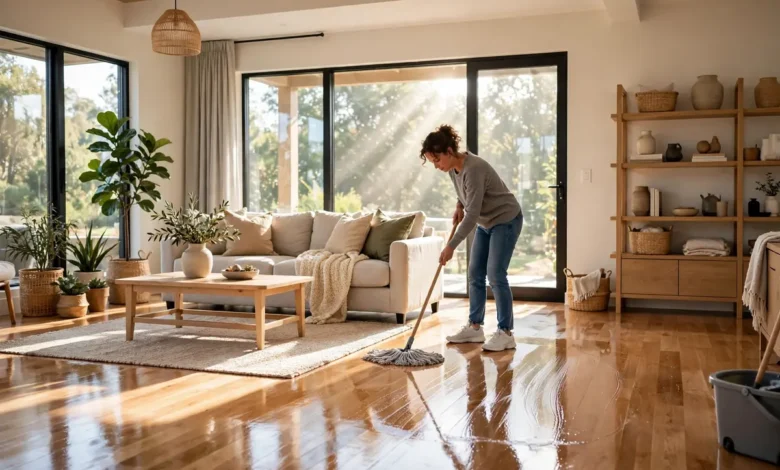
The best way to clean hardwood floors is mostly dry. Start with a microfiber dust mop or a vacuum on its bare-floor setting to lift dust and grit. Then damp-mop with a flat microfiber mop and a pH-neutral cleaner made for wood, using as little liquid as you can get away with. Dry the floor as you go. That routine handles almost every home, and it protects the finish that protects the wood.
The details matter because the common mistakes are quiet ones. Too much water, the wrong cleaner, or a steam mop can dull or damage a floor long before it looks “dirty” again. Learning how to clean hardwood floors properly is really about learning what to leave out.
How to Clean Hardwood Floors, Step by Step
Step 1: Get the grit up first
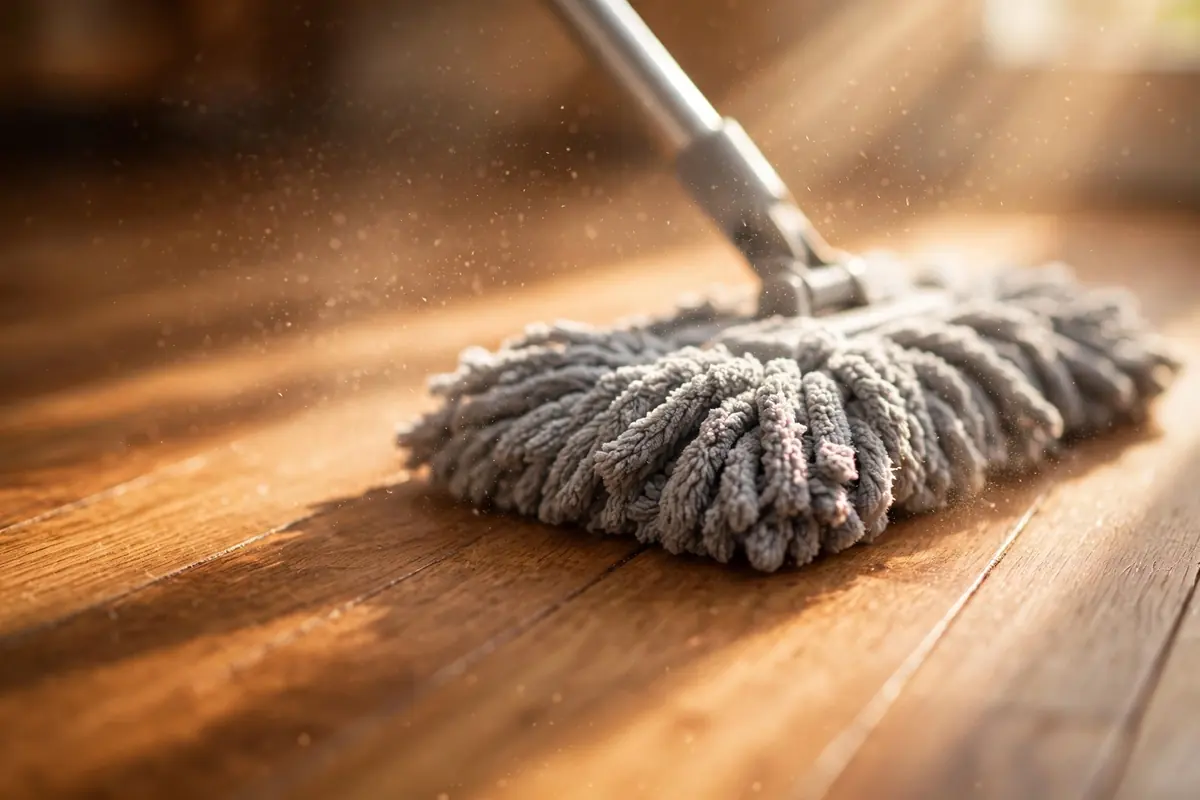
Dry cleaning comes before any liquid touches the floor. Dirt and grit act like an abrasive on the finish. The National Wood Flooring Association (NWFA) makes this point often, because grit walked across a floor — or dragged under a wet mop — scratches the coating grain by grain.
Use a microfiber dust mop for everyday passes. The fibers trap dust instead of pushing it around. A vacuum works too, and it pulls fine dust out of the seams between boards. Just switch off the rotating beater bar, or use the bare-floor setting. A spinning brush roll can scuff the finish it is meant to clean. Soft-bristle brooms are acceptable, though stiff bristles are a poor match for glossy finishes.
Step 2: Spot-clean the sticky areas
Kitchens and entryways collect grease splashes, dried drips, and tracked-in grime. Deal with those spots before the full mop pass. Spray a little hardwood cleaner onto a microfiber cloth, not onto the floor, and wipe the spot with light pressure. Floors rarely need aggressive scrubbing, and scrubbing is hard on the coating.
Step 3: Damp-mop with a pH-neutral cleaner
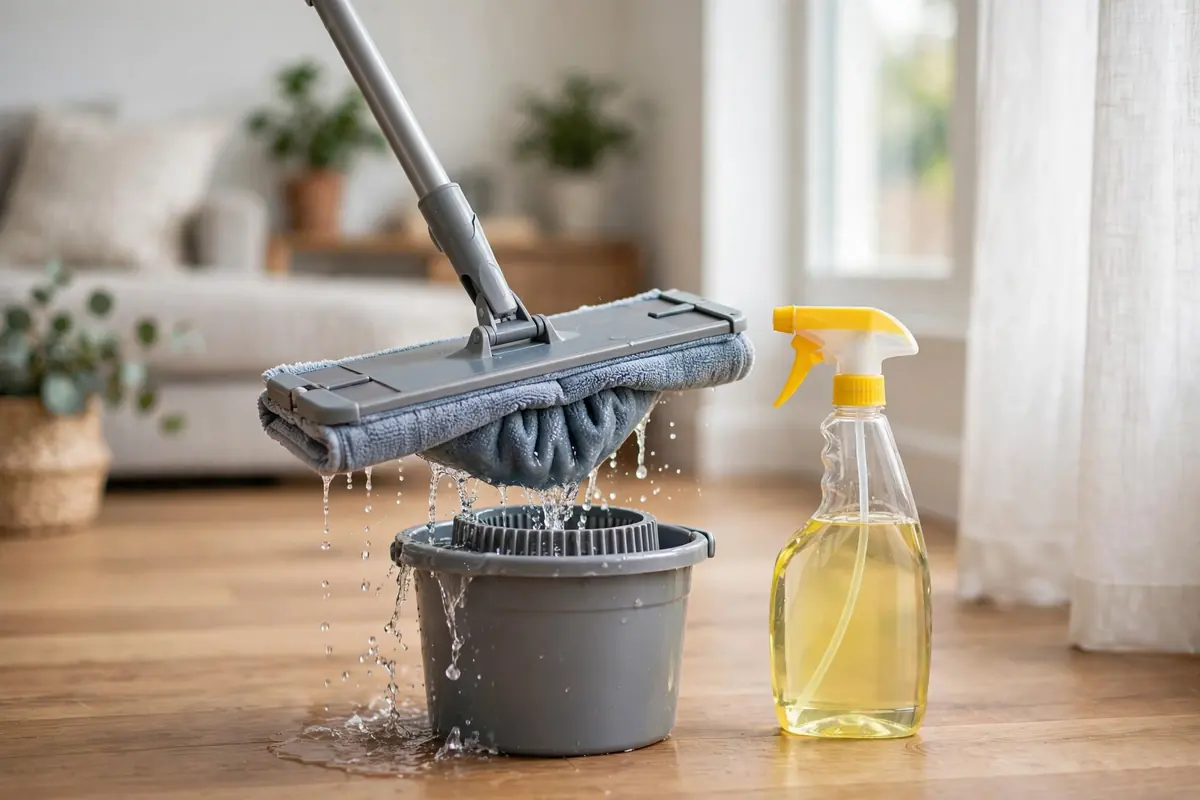
This is the wet step, and “wet” should barely apply. Mist the cleaner onto a flat microfiber mop pad, or dampen the pad and wring it until it feels almost dry. Spray mops made for hardwood work well because they control the amount of liquid. A sloshing mop-and-bucket setup does the opposite, which is why flooring makers such as Shaw advise against it.
Work in small sections and follow the direction of the grain. Start in the far corner and move toward the door so you never mop yourself into a corner. Rinse or swap the pad when it gets dirty. A dirty pad just spreads a thin film of grime across the whole room.
Step 4: Dry as you go
Do not leave water standing on the boards, even for a few minutes. Moisture that sits on the surface finds the seams and edges, and repeated exposure can lead to swelling, cupping, or a cloudy finish. A second pass with a dry microfiber pad solves it. Good airflow helps too, so open a door or run a fan while you work.
Know Your Finish Before You Choose a Cleaner
Hardwood floors are not all sealed the same way, and the finish decides which cleaners are safe.
Most modern floors have a surface finish, usually polyurethane. The coating sits on top of the wood like a thin, clear film. These floors want a water-based, pH-neutral cleaner and nothing oily or waxy.
Older or specialty floors may have a penetrating finish — oil or wax that soaks into the wood instead of coating it. Wax-finished floors need paste wax care, not water-based sprays. Oil-finished floors need products made for oil finishes. Putting a polyurethane-floor cleaner routine on a waxed floor can leave it looking worse.
Unsure which finish you have? Flooring pros often check with a drop of water in a hidden corner, under furniture or inside a closet. On a surface finish, the drop beads and sits on top. On a penetrating or worn finish, it soaks in and darkens the wood. Treat that as a clue rather than proof, and check any paperwork from the installer or flooring maker when you can.
What to Clean With — and What to Keep Off the Wood
A short kit covers everything:
- A microfiber dust mop for dry passes
- A flat microfiber mop or spray mop for damp cleaning
- A pH-neutral cleaner made for hardwood floors
- A vacuum with a bare-floor setting or a retractable beater bar
- Soft microfiber cloths for spots and drying
The pH-neutral part is the point. Cleaners from flooring brands such as Bona are formulated to clean polyurethane finishes without leaving residue or dulling them. A few drops of mild dish soap in water is a common budget stand-in, but use it sparingly and expect to rinse the pad often, since soap film builds up fast.
Keep these off finished hardwood:
- Oil soaps. They leave an oily film on polyurethane finishes. The NWFA also warns that residue from the wrong cleaner can make a floor difficult or impossible to recoat later.
- Wax-based “shine” products on surface finishes. Buildup turns hazy and traps dirt.
- Ammonia, bleach, and harsh all-purpose cleaners. These attack the finish itself.
- Anything abrasive. Scouring powders and stiff pads cut into the coating.
Can You Clean Hardwood Floors With Vinegar?
This is the most argued question in floor care, and the honest answer is that the two sides are not equal.
The case for vinegar comes from tradition. Diluted vinegar was a standard recommendation decades ago, and some cleaning writers still defend it. Their argument is that a well-diluted mix sits closer to neutral, cuts grease, and is safe if you dry each section as you go. Plenty of homeowners have used it for years without an obvious disaster.
The case against it comes from the companies that make floors and finishes. Bona states plainly that it does not recommend vinegar and water. Vinegar is an acid, and Bona says it can break down the finish, leaving the floor dull and damaged over time. The NWFA’s technical staff say the same: vinegar can dull or harm the finish, and using a cleaner the flooring maker does not recommend can void a warranty. Bruce, another major flooring maker, excludes acidic vinegar from its care guidance as well.
Damage from vinegar is slow and cumulative, which is why personal stories conflict. Nothing dramatic happens the first time. The stronger evidence sits with the manufacturers, and pH-neutral cleaners cost little more than vinegar. Skip the vinegar for routine cleaning, especially on prefinished or engineered floors still under warranty. The related keyword question — how to clean hardwood floors with vinegar — has a short answer: the people who warranty your floor say not to.
Are Steam Mops Safe on Hardwood Floors?
No, not as a default. The NWFA advises against wet mops and steam mops on wood floors. Its technical staff explain why: steam gets forced down into the gaps and end joints between boards. Repeated use can make the finish peel at the edges or turn cloudy, and a floor damaged that way may need full sanding instead of a simple recoat.
Some steam mop brands market a “sealed hardwood” setting, and that claim causes real confusion. The flooring makers’ position is what governs your warranty, and Shaw and Bruce both prohibit steam in their hardwood care guidance. Unless your specific floor’s written instructions approve steam, treat the answer as no.
How Often Should You Clean Hardwood Floors?
Frequency depends on traffic more than on the calendar, but most guidance converges on a similar rhythm:
- High-traffic areas: a quick dry pass daily, or close to it. Entryways and kitchen work zones collect grit fastest.
- Whole floors: dust-mop or vacuum weekly, and damp-mop when the floor looks dull or feels gritty — often every week or two in busy homes, less in quiet ones.
- Deeper cleans: every few weeks, using the stronger deep-clean version of a hardwood cleaner if you use one.
- Spills: immediately, always. Blot them up with a slightly damp cloth. A spill handled in a minute is a non-event; the same spill left overnight can stain or swell a seam.
Homes with dogs usually land at the frequent end of every range above. Homes without shoes indoors land at the relaxed end.
Habits That Save a Floor Between Cleanings
Cleaning removes dirt. Habits keep it out.
Put mats at every exterior door, and keep them clean — a mat loaded with grit stops working. The NWFA suggests breathable throw rugs at doorways for the same reason. Felt pads under chair and table legs prevent the fine scratches that build up into dull traffic lanes, and pads wear out, so replace them when they thin or fall off.
Shoes-off rules help more than any product, since soles carry the grit in. Dog nails are worth keeping trimmed for the same reason. Wood also moves with indoor humidity, swelling in damp months and shrinking in dry ones. Steady indoor humidity means fewer gaps opening at the seams, and fewer gaps mean fewer places for dirt and moisture to collect.
If you are refreshing the whole room rather than just the floor — stripping old wallpaper as part of the job, for instance — our guide to removing wallpaper glue covers the wall side of that project, so the room finishes as clean as the floor.
When Cleaning Is Not Enough
Sometimes a floor stays dull after a correct cleaning, and the reason is not dirt. Two possibilities cause most cases.
The first is product buildup. Layers of oil soap, polish, or too much cleaner leave a haze that mopping spreads around. Stop adding products. Clean with the plain pH-neutral routine for a while and see whether the haze fades. If a residue problem will not clear, the NWFA’s advice is to call a flooring professional rather than stacking a second cleaner on top of the first.
The second is a worn finish. When the coating itself has thinned in traffic lanes, no cleaner can bring the sheen back, because the sheen was the coating. For surface-finished floors, a professional screen-and-recoat can refresh the finish without sanding down to bare wood. True damage — boards cupped, finish peeling, stains darkened into the wood — needs a flooring contractor’s assessment, not a stronger bottle from the cleaning aisle.
Frequently Asked Questions
Is it better to sweep or vacuum hardwood floors?
Both work, and the better choice depends on the mess. A vacuum on its bare-floor setting pulls fine dust and pet hair out of seams and corners that a broom misses. A soft-bristle broom is fine for quick passes over crumbs and tracked-in dirt. Many households end up using the vacuum for the weekly clean and a dust mop for everything in between.
Do hardwood floors need to be waxed or polished?
Modern polyurethane-finished floors do not need wax, and wax can cause problems on them. Polish is a separate question — it only belongs on a floor when the flooring maker approves that specific product for that finish. A floor that was designed to look matte should not be made glossy by default. When in doubt, check the floor maker’s care sheet before applying anything marketed as a shine or refresher product.
How do I clean pet urine off hardwood floors?
Blot it up as soon as you find it, then clean the spot with your regular hardwood cleaner and dry it fully. Speed matters more than product choice. Urine left sitting can work through the finish and darken the wood underneath, and once a dark stain sits below the coating, surface cleaning cannot remove it. Repeated accidents in one spot are a reason to have a flooring professional look at the area.
Why does my floor still look dull right after mopping?
Too much cleaner is the usual cause. Concentrated or over-applied product dries into a film, and the next mopping softens and spreads that film instead of removing it. Use less cleaner, rinse the mop pad more often, and finish with a dry pass. If several careful cleanings change nothing, the dullness is more likely finish wear than residue.
Are area rugs safe on hardwood floors?
Yes, with two conditions. Use a rug pad made for hardwood floors, and lift the rugs now and then to clean underneath. Pads protect against the friction wear that happens when a rug shifts underfoot, and grit collects under rugs just as it does anywhere else. Sunlight also fades wood unevenly, so a rug left in one spot for years can leave a visible outline when it finally moves.
Can I use a mop and bucket on hardwood floors?
Flooring manufacturers advise against it, because a bucket makes it hard to control how much water reaches the wood. A spray mop or a well-wrung flat pad applies a fraction of the liquid and gives the same cleaning result. If a bucket is all you have, wring the mop until it is barely damp and dry each section right behind you.