How to Remove Wallpaper Glue: Methods That Work, From Hot Water to Steam

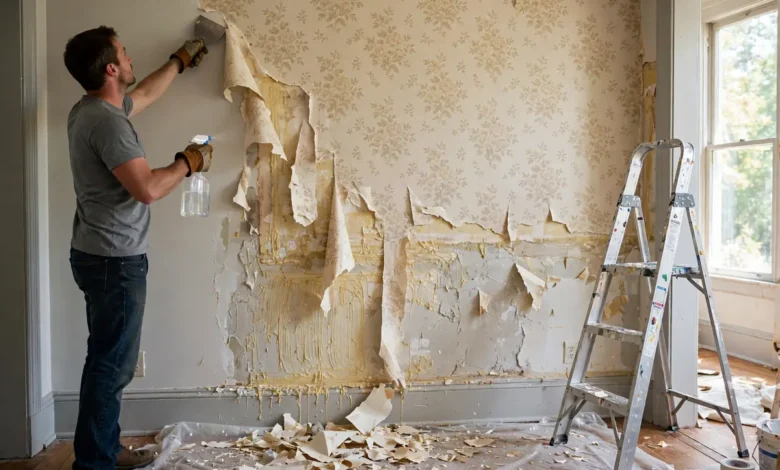
The wallpaper is off, but the wall still feels tacky under your palm. That film is old paste, and it has to go before paint or new paper touches the wall. To remove wallpaper glue, soak the residue with hot water mixed with a little dish soap, give it about 10 to 15 minutes to soften, then scrape and sponge it away. Most wallpaper paste is starch-based, so water reactivates it and turns it back into a gel you can wipe off. Stubborn residue needs a step up: a vinegar solution, a fabric softener mix, a commercial enzyme remover, or steam. Work in small sections, rinse with clean water as you go, and don’t call the wall finished until it passes the touch test described below.
What Kind of Glue Is on Your Wall?
The right method depends on which adhesive a previous installer used. Most wallpaper paste is made from wheat starch or cellulose. Both are water-based, and both soften again when they get wet. That is why plain hot water handles the majority of walls.
Older walls are less predictable. Pre-mixed vinyl adhesives and clay-based pastes were common on older installations, and borders were often hung with vinyl-to-vinyl adhesive. Those products are not fully water-soluble. They need longer soaking, a commercial remover, or steam, and sometimes all three.
A quick test tells you which type you have. Wet one patch with a hot, damp sponge and wait five minutes. If the residue turns slick and gummy, it is starch-based, and the basic method below will work. If it stays hard and glassy, plan on the stronger methods further down.
What You’ll Need
- Bucket, plus a second bucket for clean rinse water
- Spray bottle or pump sprayer
- Large sponge (a grout sponge works well)
- Plastic scraper or a wide putty knife
- Liquid dish soap
- White vinegar
- Liquid fabric softener (optional)
- Commercial wallpaper glue remover (optional, for stubborn adhesive)
- Drop cloths and painter’s tape
- Rubber gloves
- Trash bags for scrapings
Before You Start: Protect the Room
Water and electricity are a bad mix, so start at the breaker box. Turn off power to the room, then cover outlets and light switches with painter’s tape or plastic. Several pro guides treat this as a non-negotiable first step, and it takes two minutes.
Next, protect the floor. Lay drop cloths along the base of the wall, and keep a towel handy for drips. Wet paste scrapings get slippery and sticky fast, so wipe up spills as they happen instead of tracking them across the room. If the room has wood flooring, standing water can dull or damage the finish, so the same care you’d use when cleaning hardwood floors applies here: soak up drips promptly and never leave puddles sitting against the baseboards.
Finally, test your solution on one small, hidden patch. A test spot shows how fast the paste softens and how much soaking your wall tolerates. Drywall in particular should get damp, never drenched.
How to Remove Wallpaper Glue With Hot Water and Dish Soap
This is the method that clears most walls, so always start here.
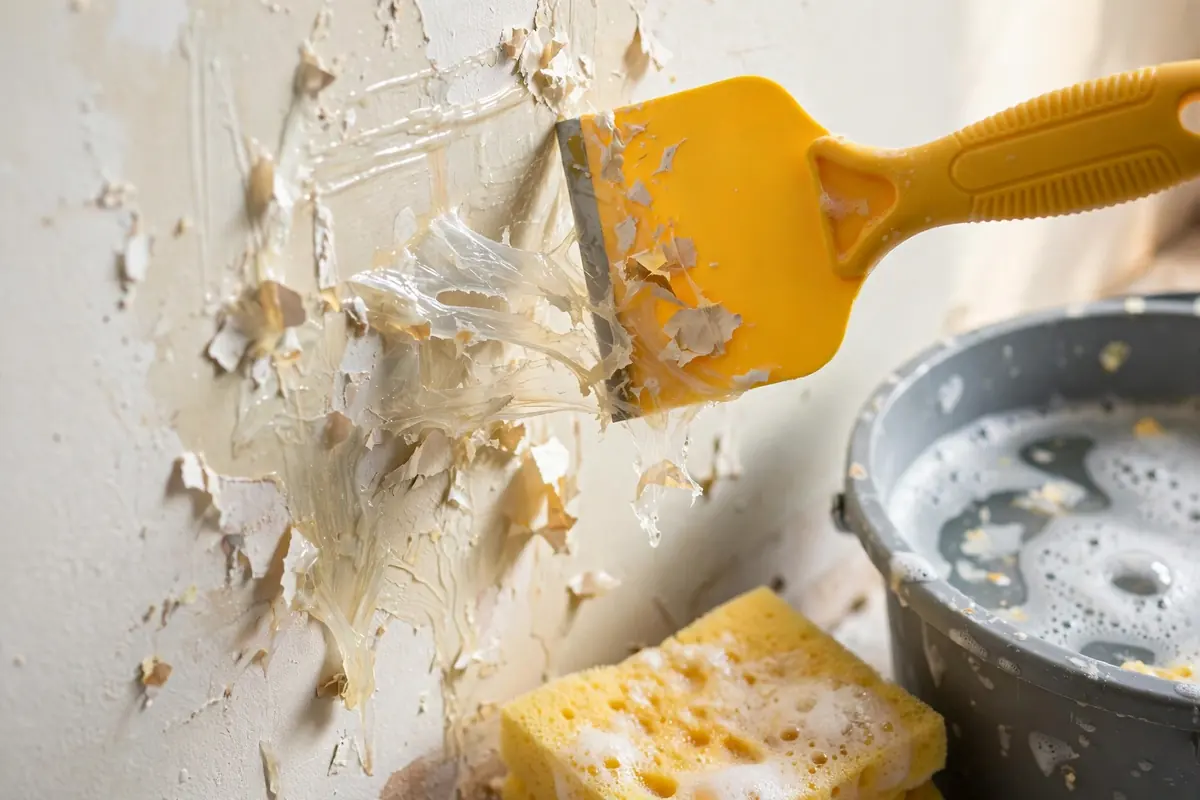
- Mix the solution. Stir about a tablespoon of liquid dish soap into a gallon of hot water. The soap lowers the water’s surface tension, so the water soaks into the paste instead of beading on top of it. Some DIY recipes add a tablespoon of baking soda as a mild boost; it is optional, not required.
- Wet one small section. Sponge or spray the solution onto an area of roughly five feet by five feet. Small sections matter, because paste that dries out again has to be re-wetted from scratch.
- Wait 10 to 15 minutes. Keep the section damp while you wait. The residue should turn soft, slick, and slightly gummy.
- Scrape gently. Hold a plastic scraper or wide putty knife at a low angle, almost flat against the wall, and lift the softened paste off. A low angle matters on drywall, where a steep blade can gouge the paper face.
- Sponge off what remains. Wipe the section with your sponge, rinsing it often. Then rinse the whole section with clean water from the second bucket.
- Repeat, section by section. Change the rinse water whenever it turns cloudy. Wiping with dirty water just spreads a thinner layer of paste across the wall.
How to Remove Wallpaper Glue With Vinegar
Vinegar earns its place when soapy water leaves a stubborn film behind. White vinegar is mildly acidic, and that acidity helps break down the starch in wallpaper paste. It is also cheap, and the smell fades as the wall dries.
One honest warning: published recipes disagree on the ratio. Common recommendations range from about a cup of vinegar per gallon of hot water for light residue up to equal parts vinegar and water for heavy buildup. So treat these as commonly recommended starting points, not exact formulas. Start with the weaker mix, test it, and strengthen it only if the paste refuses to soften.
Apply the vinegar solution with a sponge or sprayer, let it sit for 10 to 15 minutes, then scrape and sponge as before. Rinse with clean water afterward. Two or three passes on one section are normal for old paste, so don’t judge the method by the first attempt.
The Fabric Softener Method
Fabric softener sounds like a strange wall cleaner, yet there is a simple reason it works. Fabric softeners contain surfactants, the same class of ingredients that helps dish soap solutions penetrate paste. The softener helps the water get under the residue and loosen its grip.
Ratios vary here as well. Commonly recommended mixes run from one capful of liquid fabric softener in a quart of warm water up to one part softener to two parts water. Spray or sponge the mix on, wait a few minutes, scrape the softened paste, and wipe the area down.
Rinse thoroughly when you finish. Any cleaning product left on the wall, softener included, can interfere with paint later. A final wipe with plain clean water is cheap insurance.
When DIY Mixes Aren’t Enough: Commercial Removers
Some paste simply will not wash off, especially clay-based adhesive and borders hung with vinyl-to-vinyl glue. That is the job commercial removers are built for. The products most pros reach for are enzyme-based strippers, such as Zinsser DIF. The enzymes break down paste chemically instead of relying on soaking alone. A gel version also exists, and the gel clings to vertical surfaces and stays wet longer than a thin liquid.
Follow the manufacturer’s directions, because they are specific. For DIF, the instruction for leftover adhesive is to reapply the solution, wait 15 minutes, then scrape or sponge the residue off and rinse with clean water. The gel version gets 15 to 20 minutes of working time. Reapply rather than scrubbing harder; a second application does more than extra elbow grease.
If any wallpaper or vinyl coating is still on the wall, the liquid cannot reach the glue through it. Score the surface first with a scoring tool such as a Paper Tiger, which perforates the layer with tiny holes so the remover can seep through. Press lightly. The goal is holes in the paper, not marks in the drywall underneath.
Using a Steamer on Stubborn Glue
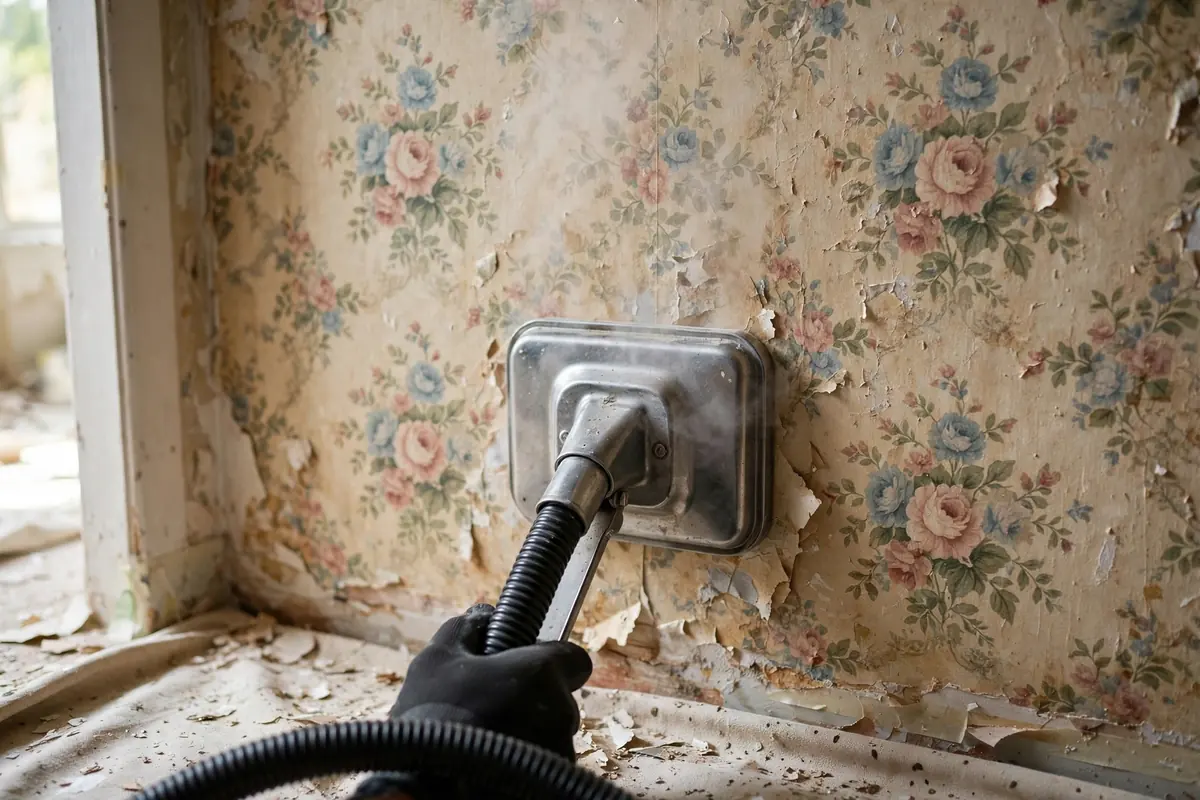
Steam combines heat and moisture, and both work in your favor. The heat speeds up the softening, while the moisture rehydrates the paste. A wallpaper steamer or a garment steamer can do the job.
Hold the steam plate against one section for roughly 30 seconds, then scrape the paste while it is still soft. Move steadily from section to section. Wear gloves, because the plate and the drips coming off it are hot enough to burn skin.
Steam has one real risk, and it involves drywall. Too much heat and moisture in one spot can soften the drywall’s paper face and even the gypsum core beneath it. So keep the plate moving, work in short bursts, and stop if the wall surface starts to feel spongy. Plaster walls tolerate steam better than drywall does.
How to Tell When the Glue Is Really Gone
Walls can look clean while a thin, invisible film of paste remains. Two checks catch it.
First, let the wall dry completely, then run a flat palm slowly across it. Tacky, slick, or shiny patches are leftover paste, no matter how clean they look. Second, wipe a damp dark cloth over a section. A cloudy smear on the cloth means residue is still coming off, so that section needs another wash.
These checks matter because of what happens next. Skip them, and the problem only shows up after you have painted.
Can You Paint Over Wallpaper Glue?
No, not directly, and the reason is simple chemistry. Most house paint is water-based, and the water in fresh paint reactivates old paste underneath it. The result is a finish that cracks, wrinkles, or blisters, with patches that never bond properly and may flake off later. Painters call one version of this failure “checking,” and extra coats of paint do not fix it.
Wash off everything you can first. If a faint film survives every method above, seal it instead of fighting it. A problem-solving primer made for damaged walls, such as Zinsser Gardz, is formulated to seal in old wallpaper adhesive and lock down the surface. Painters use this approach when washing alone is not enough. Once the sealer dries, prime and paint as normal.
After cleaning, let the wall dry fully before you paint. A full day of drying is a common recommendation. Then sand any rough spots lightly, fill dings and gouges with joint compound, sand those smooth once dry, and prime ahead of your paint.
Mistakes That Make the Job Harder
- Scraping dry glue. Dry paste is hard, and forcing it off tears drywall paper. Soften first, always.
- Flooding the wall. More water is not better on drywall. Damp and patient beats soaked and fast.
- Using one bucket of rinse water all day. Dirty rinse water redeposits paste across clean sections.
- Reaching for a sharp metal scraper. A dull plastic scraper or a putty knife held flat removes paste without carving up the wall.
- Painting over a wall that still feels tacky. Tackiness is paste. Wash again or seal it, as described above.
- Skipping the test patch. Two minutes of testing beats repairing a wall face damaged by over-soaking.
Frequently Asked Questions
What is the best wallpaper glue remover?
The best wallpaper glue remover depends on the paste. For standard starch paste, hot water with dish soap removes it without any special product. For old, clay-based, or vinyl adhesive, an enzyme-based commercial remover such as Zinsser DIF is the stronger choice, and the gel version suits walls best because it clings and stays wet longer. Test a small area first, and buy the specialty product only if the household methods stall.
Can hot water alone remove wallpaper glue?
Yes, on starch-based paste hot water alone often works, because the paste is water-soluble by design. Dish soap still helps, since it lets the water penetrate faster and more evenly. Plain water struggles with clay-based and vinyl adhesives, though, so a wall that stays hard after two hot-water passes needs vinegar, a commercial remover, or steam instead of a third identical attempt.
Why is my wall still sticky after washing off the glue?
A thin film of paste usually remains even when the wall looks clean. Dried paste can be nearly invisible but still tacky under your palm. Wash the section again with your solution, rinse with fresh clean water, and repeat the palm test once the wall dries. If the film survives repeated washing, seal it with a problem-solving primer such as Zinsser Gardz before painting rather than scrubbing until the drywall suffers.
Does vinegar damage walls when removing wallpaper glue?
At the dilutions commonly recommended, a vinegar solution is safe for most wall surfaces, including painted walls and plaster. The bigger risk is water, not vinegar: soaking drywall too heavily can harm its paper face regardless of what is mixed into the bucket. Test your mix on a hidden patch, keep drywall damp rather than saturated, and rinse with clean water when you finish.
Do I need to sand the wall after removing wallpaper glue?
Only lightly, and only in specific spots. Sanding smooths dried ridges, scraper marks, and patched areas so they don’t show through paint. Sanding is not a shortcut for washing, though. Paste that is still on the wall will gum up under paint whether it feels smooth or not, so wash first, let the wall dry, and then sand just the rough places.
Can I hang new wallpaper over old glue residue?
It is not a good idea. New paste and old residue bond unevenly, so seams can lift and the old texture can telegraph through the new paper. The wall should feel completely smooth and non-tacky before new wallpaper goes up. Wash the residue off the same way you would before painting, and let the wall dry fully first.