

Kitchen ventilation plays an important role in managing cooking odours, grease, steam, and airborne particles. For homes with a standard-width cooktop and cabinetry above the cooking area, an under cabinet range hood 30 inch can provide a practical ventilation solution without taking up additional wall space.
Under-cabinet hoods are installed directly below kitchen cabinets and above a cooktop or range. Their compact design makes them suitable for apartments, condos, smaller kitchens, and traditional cabinet layouts. They are available in ducted, ductless, and convertible configurations, allowing homeowners to select a model based on their kitchen structure and ventilation needs.
Before choosing a range hood, it is important to consider the cooktop width, cabinet depth, airflow requirements, duct placement, mounting clearance, filter type, and maintenance needs.
Why Choose a 30-Inch Under-Cabinet Hood?
A 30-inch hood is generally designed to pair with a standard 30-inch cooktop or range. Matching the width of the hood to the width of the cooking surface helps improve coverage over burners and allows the fan system to capture more cooking air.
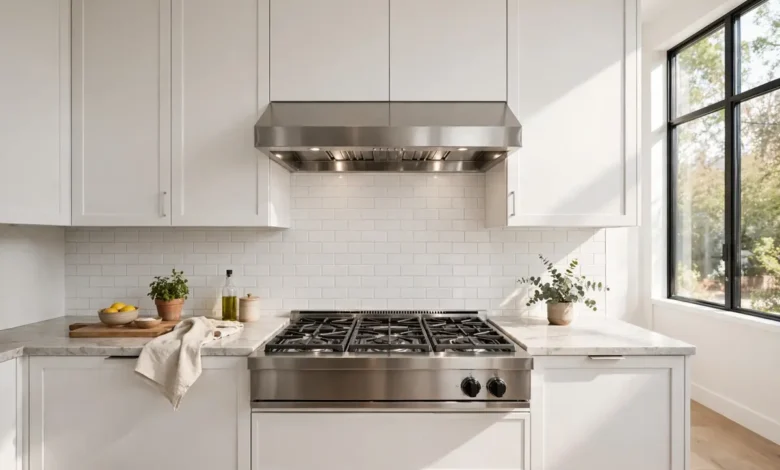
A under cabinet range hood 30 inch can be a suitable option for kitchens where upper cabinetry is already installed above the range. Instead of requiring a separate chimney or decorative enclosure, the hood fits beneath the existing cabinet structure.
This type of hood may be useful for:
- Standard 30-inch cooktops
- Compact kitchens
- Condominiums and apartments
- Kitchens with upper cabinets
- Renovation projects with limited wall space
- Households seeking a space-saving design
- Traditional kitchen layouts
- Replacement of an existing under-cabinet hood
Under-cabinet models are available in slim, standard-depth, and higher-capacity designs. Slim units may be suitable for kitchens with limited cabinet clearance, while deeper models can provide broader coverage over the front burners.
Measure the Space Before Buying
Accurate measurement is essential before selecting a hood. Even if the cooktop is 30 inches wide, the available cabinet space, hood depth, and duct location may affect which model can be installed.
Measure the following areas:
- Width of the cooktop
- Width of the cabinet above the cooktop
- Depth of the cabinet
- Space between the cooktop and upper cabinet
- Height from the cooking surface to the cabinet
- Location of electrical connections
- Existing duct opening, if available
- Clearance around nearby walls or cabinets
- Depth of the hood in relation to front burners
The hood should be at least as wide as the cooktop. A wider hood may provide improved coverage if the kitchen layout allows for it. A 30-inch design is commonly used for standard-sized cooking surfaces, but product dimensions can vary slightly between models.
An under cabinet range hood 30 inch should also be installed at the height recommended by the manufacturer. Installation height may differ depending on whether the range is gas, electric, or induction. Always follow the instructions supplied with the hood and cooking appliance.
Choose Between Ducted and Ductless Ventilation
Ducted hoods move cooking air outside through a duct system. This option is generally effective for removing heat, steam, smoke, grease, and odours from the kitchen. Ducted ventilation may be especially useful for households that cook frequently or use high-heat methods such as frying, searing, grilling, or stir-frying.
Ductless hoods filter air and return it to the room. They often use metal grease filters and charcoal filters. This can be a practical option when external ductwork is not available or cannot be installed.
Convertible models can operate in either ducted or ductless mode, depending on the installation. This provides more flexibility but requires the correct setup and filter configuration.
When comparing 30 inch range hoods under cabinet, consider whether the kitchen already has a duct opening. If existing ductwork is present, inspect its location, size, and route. Long duct runs, sharp bends, and narrow ducts can reduce airflow performance.
Ductless systems can help reduce some grease and odours, but they do not remove heat and moisture from the kitchen in the same way as ducted systems. Charcoal filters also require regular replacement to remain effective.
Consider Airflow and Fan Speeds
Airflow is commonly measured in cubic feet per minute, or CFM. This indicates how much air the fan can move. A higher CFM rating may be helpful for heavy cooking, but it can also create more fan noise.
The right airflow level depends on the kitchen size, range type, cooking habits, and ducting system. A household that prepares simple meals may not need the same ventilation power as one that cooks with multiple burners at high heat.
A under cabinet range hood 30 inch with multiple fan-speed settings can provide better control. Lower settings may be suitable for light cooking, while higher settings can help manage stronger cooking odours, smoke, or steam.
Some 30-inch under-cabinet models are available with airflow capacities ranging from lower-power recirculating designs to high-CFM ducted systems.
Noise level is another factor to consider. A powerful hood may be less comfortable in an open-concept home if it produces excessive sound. Check product information for noise ratings, speed settings, and fan design before making a selection.
Look at Filters and Lighting
Filters affect the hood’s ability to manage grease and odours. Metal mesh filters are commonly used to capture grease particles and may be washable. Baffle filters are often used in higher-capacity models and can be easier to clean. Charcoal filters are generally used for ductless operation and should be replaced according to the manufacturer’s recommendations.
Lighting is also useful because it improves visibility over the cooktop. LED lights are common in modern hoods because they provide focused task lighting and generally use less energy than older bulb types.
When selecting an under cabinet hood 30 inch, check whether the filters are easy to remove and clean. Regular maintenance is important because grease buildup can reduce airflow and make the hood less effective.
Match the Hood to Kitchen Design
Under-cabinet hoods are available in stainless steel, black stainless, white, black, and other finishes. A stainless-steel hood may coordinate well with matching appliances, while a white or black model may blend more easily with painted cabinetry.
Slim models can create a low-profile appearance, while deeper stainless-steel hoods may create a more professional look. The best design should fit the kitchen’s overall style without compromising coverage or airflow.
Control options may include push buttons, touch panels, electronic controls, or remote operation. Choose controls that are easy to access and simple to clean.
Everyday Comfort and Cleaner Surfaces
The difference is felt day to day, not just on a specification sheet. Capturing grease at the hob means less of it settles on cupboard fronts, walls and worktops, so the kitchen needs less frequent deep cleaning and its finishes stay looking newer. Removing heat and steam as they rise also makes the room more pleasant to stand in, especially during a long cooking session or when several burners are going at once, and it helps stop cooking smells drifting through the rest of the home.
Conclusion
A 30-inch under-cabinet hood can provide practical ventilation for kitchens with standard-width cooktops and upper cabinetry. The right model should fit the available space, provide suitable airflow, and match the household’s cooking habits. When comparing a 30 inch range hood under cabinet, review the ventilation type, CFM rating, filter system, mounting dimensions, noise level, and lighting features. Careful planning before purchase can help ensure that the hood performs effectively and fits the kitchen layout correctly. Regular cleaning and filter maintenance can support long-term ventilation performance.
To sum up, measure carefully and match the hood to your cooking habits before ordering an under cabinet range hood 30 inch. Ratings published through the Home Ventilating Institute can help you compare one under cabinet range hood 30 inch with another on verified airflow and sound figures.
If you ever move up to a professional-style cooker, you will want to know about 54-inch range hoods. If you’re considering a bigger kitchen project, plan your home renovation with our step-by-step guide.
Related Guides
Got a wider range instead? See our guide to selecting a 36-inch under-cabinet range hood by CFM for airflow sizing on larger cooktops.