
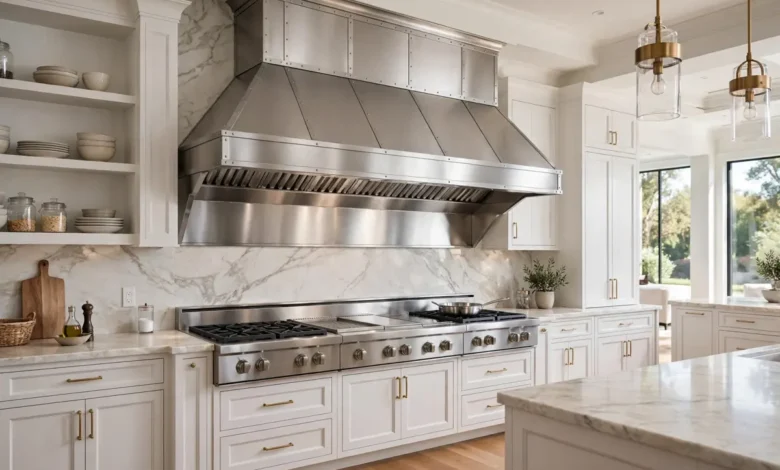

A powerful kitchen ventilation system is especially important when a cooking space includes a wide range, multiple high-output burners, or frequent frying, grilling, and searing. Larger hoods are designed to capture more smoke, grease, steam, and airborne cooking particles before they spread throughout the kitchen. For homeowners planning a spacious cooking area, 54 inch range hoods can provide the broad coverage needed above larger ranges and cooktops. However, choosing the right model involves much more than width alone. Airflow capacity, duct design, mounting height, filter type, noise, and makeup air requirements all influence real-world performance.
When Do You Need a 54 Inch Range Hood?
The width of a range hood should generally be selected according to the size and location of the cooking surface.
A wider hood can improve capture because smoke and steam do not always rise vertically. Heat currents can carry cooking contaminants outward before they reach the hood.
54 inch range hoods may therefore be suitable for large residential ranges or cooktops, particularly when additional overhang beyond the cooking surface is desirable.
Before choosing a size, consider:
- Width of the range or cooktop
- Wall-mounted or island installation
- Burner output
- Mounting height
- Cabinet dimensions
- Available duct route
- Frequency of high-heat cooking
The installation instructions for both the range and hood should ultimately determine the required clearances.
How Much Airflow Should a Large Range Hood Have?
Range hood airflow is usually measured in cubic feet per minute, or CFM.
Higher CFM ratings indicate that a fan can move a greater volume of air, but selecting airflow purely by choosing the highest number is not always appropriate.
A large gas range with multiple high-BTU burners generally produces more heat and combustion byproducts than a low-output electric cooktop. Heavy frying, wok cooking, grilling, and searing can also create more smoke and grease.
For this reason, 54 inch range hoods should be matched to the actual cooking equipment and usage pattern rather than selected by width alone.
Very high airflow may also trigger local building-code requirements for makeup air, so ventilation should be considered as part of the whole home’s air system.
Why Does Hood Depth Matter?
Width receives considerable attention, but hood depth also affects capture.
A shallow hood may leave the front burners partially outside the effective capture area, allowing smoke and steam to escape into the room.
Deeper 54 inch range hoods can provide greater coverage over the cooking surface, particularly when paired with professional-style ranges that extend farther from the wall.
However, excessive depth can create clearance or headroom problems.
The goal is to balance capture area with safe, comfortable access to the cooktop.
Wall-Mount vs. Island Range Hoods
Wall-mounted and island hoods operate in different airflow environments.
A wall-mounted hood benefits from the wall behind the cooking surface, which helps contain rising fumes and guide them toward the hood.
An island hood is exposed on all sides. Air movement from people walking nearby, ceiling fans, HVAC vents, and open-plan spaces can push cooking fumes away from the capture area.
As a result, island 54 inch range hoods may require careful sizing and airflow planning to achieve comparable performance.
Homeowners should select a model designed specifically for the intended installation rather than attempting to adapt a wall hood for an island location.
Why Ductwork Can Make or Break Performance
A strong blower cannot compensate for poorly designed ductwork.
Long runs, undersized ducts, multiple sharp elbows, and restrictive exterior caps all increase resistance to airflow. The result can be reduced ventilation performance and increased noise.
When installing 54 inch range hoods, the duct diameter recommended by the manufacturer should normally be maintained throughout the run.
Smooth metal ductwork is generally preferable to flexible ducting because it produces less turbulence and does not trap grease as easily.
The shortest practical route to the exterior is usually the most efficient.
Every unnecessary turn adds resistance, so duct layout should be considered before cabinets and finishes are finalized.
What Type of Filters Work Best?
Grease filters protect the internal ventilation system by capturing airborne grease before it travels into the ductwork.
Baffle filters are frequently used in larger residential and commercial-style hoods because their design encourages grease to separate from moving air. Many stainless-steel baffle filters are also washable.
Mesh filters can also capture grease effectively but may require more frequent cleaning depending on cooking habits.
Regardless of design, filters inside 54 inch range hoods need regular maintenance. Grease accumulation can restrict airflow, create odors, and increase fire risk.
Homes where frying and high-heat cooking are frequent will generally require more frequent cleaning than kitchens used mainly for light cooking.
How High Should a Range Hood Be Installed?
Mounting height affects both capture efficiency and usability.
If a hood is positioned too high, smoke may spread outward before entering the capture area. If it is too low, it can interfere with cooking and may be exposed to excessive heat.
Manufacturers specify acceptable mounting distances based on hood design and cooking appliance type.
When installing 54 inch range hoods, those specifications should be followed rather than relying on a universal height.
Ceiling height also matters. In kitchens with unusually tall ceilings, chimney extensions or custom duct covers may be necessary.
What Is Makeup Air?
Every cubic foot of air exhausted from a kitchen must eventually be replaced.
High-capacity range hoods can remove substantial amounts of indoor air. In tightly constructed homes, this can create negative pressure.
Negative pressure may affect combustion appliances, fireplaces, doors, and overall indoor comfort.
Some building codes require a dedicated makeup air system once a hood exceeds a specified exhaust rate.
Anyone considering high-powered 54 inch range hoods should check local code requirements before installation.
A qualified HVAC professional can assess whether passive air replacement is sufficient or whether a dedicated makeup air system is necessary.
How Can You Reduce Range Hood Noise?
Large hoods are not automatically noisy.
Sound depends on blower design, fan speed, duct resistance, installation quality, and the amount of airflow being moved.
One practical strategy is to choose enough ventilation capacity that normal cooking can be handled at a lower fan setting. Maximum fan speed can then be reserved for heavy cooking.
Straight, properly sized ductwork can also reduce turbulence and noise.
Keeping filters clean is equally important because blocked filters increase airflow resistance.
Some premium 54 inch range hoods may also use remote or external blowers, which can move part of the sound-producing equipment away from the immediate cooking area.
Which Features Are Actually Useful?
Modern range hoods can include numerous convenience features, but not all of them affect ventilation performance.
Useful options may include:
- Multiple fan speeds
- LED cooking lights
- Stainless-steel baffle filters
- Delayed shutoff
- Remote controls
- Heat-sensitive operation
- Dishwasher-safe filters
- Variable-speed blowers
Lighting deserves particular attention because a large hood can block some overhead light from reaching the cooking surface.
Integrated task lighting can make food preparation easier while also improving visibility during cleaning.
However, airflow, capture area, duct design, and installation quality should remain higher priorities than electronic features.
How Should You Compare Different 54-Inch Models?
Product comparisons should begin with technical compatibility.
Look at CFM range, duct diameter, mounting configuration, hood depth, mounting-height requirements, filter type, and noise specifications.
After confirming those essentials, compare construction quality, control layout, lighting, warranty coverage, and maintenance requirements.
A model that looks impressive may still perform poorly if the duct system is unsuitable or the hood is mounted incorrectly.
Choosing 54 inch range hoods should therefore be approached as a ventilation-design decision rather than simply an appliance-style decision.
Conclusion
Large cooking spaces require ventilation that can capture heat, grease, smoke, and steam before they spread throughout the home. Hood width is important, but reliable performance also depends on depth, airflow, duct sizing, installation height, filters, and replacement air. Homeowners comparing best-selling dream home series range hoods should evaluate how each model fits their specific range dimensions, cooking habits, duct route, and overall kitchen ventilation requirements rather than relying only on appearance or maximum airflow ratings. Properly selected 54 inch range hoods can provide effective coverage for wide residential cooking surfaces while supporting a cleaner and more comfortable kitchen environment. Careful planning before installation can also reduce noise, improve capture efficiency, and help the ventilation system perform consistently over the long term. If the new hood is part of a larger kitchen project, our home renovation guide covers planning and costs.
Related Guides
- 42 Inch Exhaust Hood: When Is This Size Right for Your Kitchen?
- 60 Kitchen Hood Maintenance: How to Clean It Safely
- Under Cabinet Range Hood 30 Inch Buying Guide
- Selecting a Range Hood Under Cabinet 36 Inch Based on CFM
- How Z-Line Appliance Packages Simplify Modern Kitchen Design
- Why a 36 Kitchen Exhaust Hood Is a Smart Choice for Modern Kitchens
- What to Know Before Buying a 36 Inch Exhaust Hood?
- Classic Quartz Countertops: Timeless Style for Modern Kitchens