

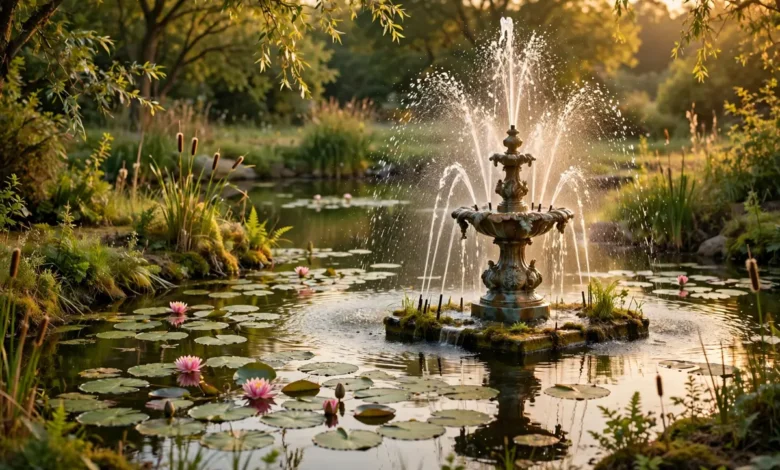
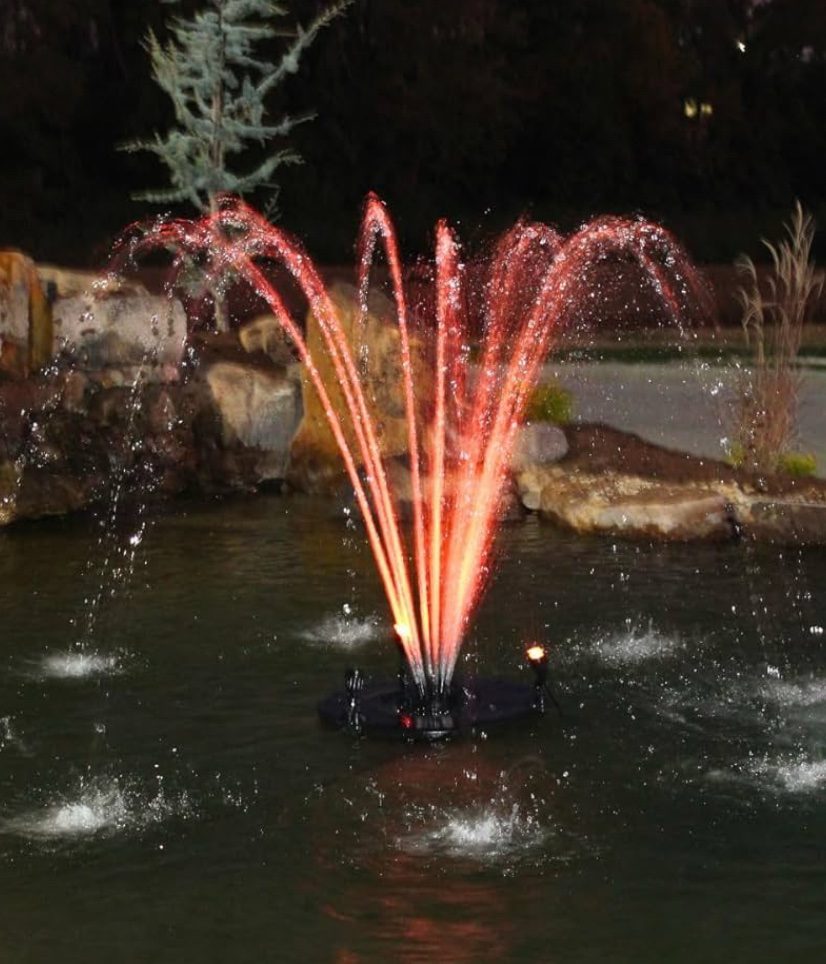
Ponds can serve as attractive landscape features, but still water may benefit from additional circulation and aeration. Floating fountain systems combine water movement with decorative spray patterns, making them useful for residential ponds, farm ponds, private lakes, and other outdoor water features. Choosing the right equipment requires consideration of pond size, pump capacity, spray pattern, electrical requirements, and maintenance. For property owners comparing floating fountains for ponds, understanding these factors can help identify a system that balances visual appeal and practical performance.
What Are Floating Fountains for Ponds?
Floating fountains for ponds are water features that rest on the surface of a pond and use a submerged pump to draw water upward through a nozzle. The water is then sprayed into the air before returning to the pond.
Because the fountain floats, it can accommodate changing water levels more easily than some fixed installations. Mooring ropes or similar anchoring systems can be used to keep the fountain in its intended position.
The circulating water can create surface movement and contribute to oxygen exchange. However, fountain aeration should not automatically be treated as equivalent to every type of dedicated pond aeration system. Performance depends on pump capacity, nozzle design, pond dimensions, and operating conditions.
How Do Floating Pond Fountains Work?
A floating fountain generally consists of a buoyant base, pump, nozzle, electrical connection, and anchoring system. The pump draws pond water through an intake and pushes it upward through the selected spray head.
As the water rises and falls back into the pond, it creates movement across the surface. This can help reduce stagnant areas and increase interaction between water and air.
The correct capacity depends on the pond and the desired display rather than simply choosing the most powerful available pump.
What Are the Main Benefits?
One reason property owners consider floating fountains for ponds is their combination of function and appearance.
Water Circulation
Moving water can help prevent the surface from becoming completely stagnant. Circulation distributes water and creates greater surface activity.
Aeration
When water is sprayed into the air, its contact with the atmosphere increases. This can support oxygen exchange, although the actual effect depends on fountain design and pond conditions.
Visual Appeal
A fountain creates a central focal point that can enhance landscaping around residential or commercial water features.
Sound
The sound of falling water can create a calming atmosphere and add another sensory element to outdoor spaces.
Flexible Installation
Floating systems can generally be positioned on the water rather than requiring a permanent structure built into the pond floor.
How Do You Select the Correct Fountain Size?
Pond dimensions are among the most important factors when choosing a fountain.
A smaller pond may require a lower-flow system, while larger ponds can accommodate more powerful pumps and wider spray patterns. The desired spray height and visual scale should also be considered.
Before purchasing, determine:
- Pond surface area
- Approximate depth
- Desired spray height
- Desired spray width
- Pump flow rate
- Available electrical supply
- Distance from the power source
- Typical wind conditions
Why Does the Nozzle Matter?
The pump determines how much water can be moved, but the nozzle determines how that water is distributed.
Different nozzles can produce narrow vertical sprays, wider plumes, or more decorative patterns. The appropriate choice depends on the pond’s size and the appearance the property owner wants to achieve.
A wide spray may look impressive on a large pond but could create excessive overspray on a smaller water feature. Wind can also affect spray direction, so the fountain should be positioned with local conditions in mind.
Can Floating Fountains Improve Pond Conditions?
Fountain circulation can contribute to healthier water conditions by reducing stagnation and supporting oxygen exchange. However, pond health depends on multiple environmental factors.
Water temperature, sunlight, nutrients, organic debris, algae, fish populations, sediment, and runoff can all influence water quality.
A fountain can be part of a broader pond-management strategy, but it should not be expected to solve every water-quality issue on its own.
If a pond has persistent algae, odor, excessive sediment, or other problems, property owners may need to address the underlying cause in addition to improving circulation.
Should You Add Lighting?
Adding outdoor fountain lighting can extend the visual impact of a fountain beyond daylight hours. LED fixtures positioned around the spray can illuminate falling water and create reflections across the pond.
White LEDs generally produce a straightforward and elegant appearance, while color-changing LEDs provide more flexibility for events, holidays, and landscape design.
Lighting should be selected according to the fountain size, viewing distance, desired brightness, and electrical setup.
What Are the Advantages of LED Fountain Lights?
LED technology is commonly used in outdoor water features because it can provide substantial illumination without the energy demands associated with many older lighting technologies.
For fountain applications, LED fixtures can highlight water movement while remaining relatively compact. Color-changing systems can also create multiple visual effects without replacing the fixtures.
When selecting lighting, property owners should verify that fixtures, cables, connectors, and transformers are specifically designed for the intended outdoor or aquatic application.
Electrical safety is particularly important around water. Outdoor electrical connections should use appropriate protection and installation practices, including suitable GFCI protection where required.
Where Should a Floating Fountain Be Placed?
Placement influences both appearance and performance.
Positioning a fountain near the center of a pond may provide a balanced display, but the best location depends on the pond’s shape, viewing angles, wind direction, depth, and electrical access.
The fountain should be anchored securely enough to prevent unwanted movement. It should also have sufficient clearance from docks, walkways, structures, vegetation, and other obstacles.
Wind should receive particular attention. Strong wind can move water outside the pond, potentially causing unnecessary water loss or creating slippery surfaces near walkways.
How Much Maintenance Is Required?
Floating fountains generally require routine maintenance even when they are designed for continuous outdoor operation.
Common tasks include cleaning the pump intake, checking the debris protection system, inspecting the nozzle, examining electrical connections, and monitoring spray performance.
Leaves and other debris can restrict water flow and reduce fountain performance. If spray height suddenly decreases, the cause may be a clogged intake, blocked nozzle, pump problem, or changing water level.
In freezing climates, seasonal removal or winterization may be necessary to protect equipment from ice damage.
Can Floating Fountains Run Continuously?
Some floating fountain systems are designed for continuous operation, provided the pump remains properly submerged and the equipment receives appropriate maintenance.
However, continuous operation is not always necessary. Property owners may use timers to operate fountains during specific hours, particularly when nighttime lighting is involved.
Operating schedules can also help reduce electricity consumption and limit unnecessary fountain operation when the property is not being used.
The manufacturer’s recommendations should always be followed regarding operating conditions and maintenance.
What Should You Consider Before Buying?
Before choosing floating fountains for ponds, evaluate the complete installation rather than focusing on one specification.
Consider:
- Pond size and depth
- Pump horsepower
- Gallons-per-hour rating
- Nozzle pattern
- Fountain height and width
- Electrical requirements
- Cord length
- Anchoring method
- Lighting requirements
- Maintenance and warranty
- Local weather conditions
- Desired operating schedule
A properly matched system can provide better performance and avoid problems associated with excessive spray, insufficient circulation, or inadequate electrical capacity.
Conclusion
Floating fountains for ponds can combine water circulation, aeration, sound, and visual appeal in a single outdoor water feature. Their floating design provides flexibility, while different pump capacities and nozzle patterns allow property owners to select equipment based on pond size and desired performance. Adding lighting can further enhance a fountain after sunset, particularly when the water feature is visible from patios, walkways, entrances, or entertainment areas. Outdoor fountain lighting can illuminate moving water and create either subtle white displays or customizable color effects, making a pond feature useful during both daytime and evening hours. By evaluating pond dimensions, pump capacity, spray design, electrical requirements, anchoring, lighting, and maintenance needs, property owners can select a fountain system that fits both their landscape and long-term water-feature goals.
Outdoor projects like this reward the same judgment as any home repair — knowing when maintenance is enough and when replacement is the smarter call — so it helps to read up on when to replace a garage door instead of simply repairing it.