
Finding the right studio can significantly affect the quality, efficiency, and overall experience of a photography session. New York City offers a wide range of studios, from compact daylight spaces to larger production environments designed for fashion, commercial, and editorial work. Before booking, photographers should consider the studio’s size, lighting, equipment, accessibility, and suitability for the planned shoot. A well-chosen photo studio rental in New York City can provide a controlled environment that is difficult to achieve in outdoor or improvised locations.
What Type of Photography Are You Planning?
The first step is identifying the type of photography you intend to create. Portrait sessions may require a relatively simple setup with adequate space for a subject, photographer, lights, and backdrop. Fashion shoots can require greater shooting distance, higher ceilings, changing areas, and room for multiple crew members.
Product photography may have different requirements, including stable lighting, clean surfaces, tables, and sufficient electrical access. Meanwhile, content creation may benefit from multiple backgrounds or versatile areas within the same studio.
Matching the studio to the project prevents you from paying for features you do not need while avoiding limitations that could disrupt the shoot.
Evaluate Space, Ceiling Height, and Layout
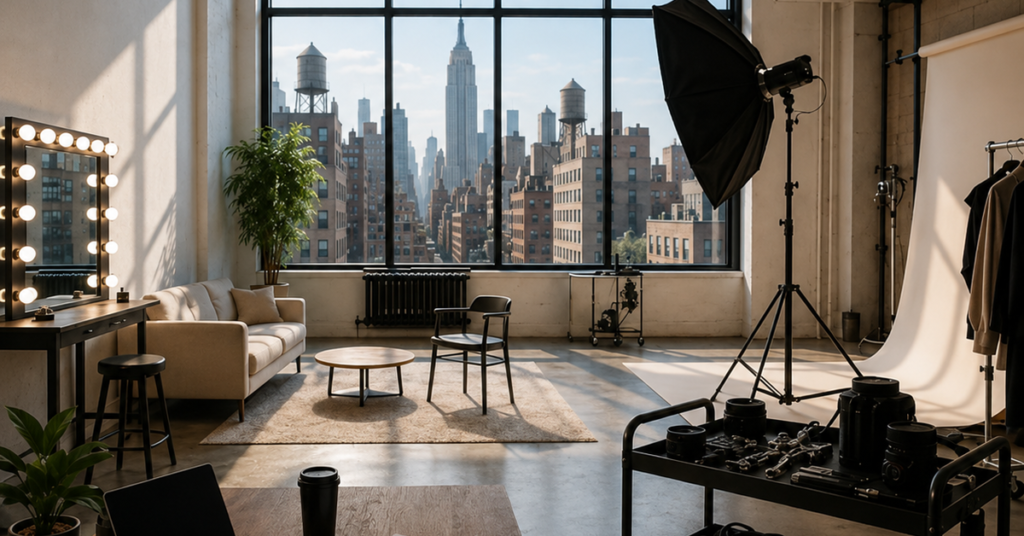
The physical dimensions of a studio are among the most important factors to examine. A room that appears spacious in photographs may feel restrictive once cameras, lighting stands, models, assistants, and other equipment are inside.
Ceiling height is particularly important because it affects how high lights and modifiers can be positioned. Industry guidance commonly recommends around 10 feet as a practical minimum for standard portrait and product work, while fashion and more complex productions can benefit from 12 feet or more.
When comparing a photo studio rental in New York City, also consider the distance between the camera position and backdrop. Longer shooting distances provide greater flexibility for full-length portraits, group photography, and fashion images.
Check Natural and Artificial Lighting
Lighting can determine whether a studio works for your creative concept. Natural-light studios are useful for lifestyle, portrait, editorial, and social media photography, particularly when large windows provide consistent daylight.
Artificial lighting offers greater control because photographers can shape the intensity, direction, and quality of illumination. Before booking, check whether strobes, continuous lights, softboxes, reflectors, stands, or other modifiers are included.
For example, some NYC rental studios provide equipment as part of their hourly rate, which can reduce the amount of gear photographers need to transport. Grattan Studio’s Brooklyn location lists Profoto lighting, stands, backdrops, and other equipment among its included amenities.
Consider Backdrops and Shooting Surfaces
Backdrops are another practical consideration. A studio may offer seamless paper, fabric backgrounds, colored backdrops, or dedicated backdrop systems. The right choice depends on the visual style of the project.
Photographers should also check the floor and wall surfaces. A neutral environment provides greater flexibility because the space can be adapted to different concepts without competing visual elements.
If you need multiple looks during one session, ask whether backdrop changes are included in the rental or require additional fees. Understanding these details beforehand makes it easier to plan both the budget and schedule.
Look Beyond the Studio Itself
A successful shoot depends on more than the room. Accessibility, restrooms, changing areas, Wi-Fi, climate control, equipment storage, and loading arrangements can all influence the working experience.
Location is particularly important in New York City. Consider how easily photographers, models, clients, stylists, and assistants can reach the studio. Nearby public transportation can be especially valuable when multiple people are traveling to the same shoot.
Parking and equipment access also deserve attention. Carrying cameras, lighting equipment, stands, props, and wardrobe through a difficult entrance can add unnecessary time to the production.
Understand Pricing and Rental Terms
Hourly pricing is only one part of the total cost. Before confirming a photo studio rental in New York City, review the booking duration, overtime policy, cleaning requirements, equipment fees, backdrop charges, cancellation terms, and permitted activities.
Some studios offer equipment within the base rental price, while others charge separately for certain items. Asking for a complete breakdown beforehand helps avoid unexpected expenses.
It is also useful to determine how much setup and cleanup time is included. A two-hour shoot may actually require additional time for equipment preparation, wardrobe changes, and breakdown.
Choose a Studio That Supports Your Workflow
The best photo studio rental in New York City is not necessarily the largest or most expensive option. It should provide the combination of space, lighting, equipment, accessibility, and amenities required for your particular project. Before making a reservation, create a simple checklist based on your shoot. Consider the number of people involved, equipment requirements, lighting style, backdrop needs, shooting distance, and total production time. Comparing studios using the same criteria makes the decision much easier. A suitable photography studio rental space can ultimately give photographers greater control over their environment, allowing them to focus on composition, lighting, and the creative direction of the shoot rather than dealing with unpredictable external conditions.