

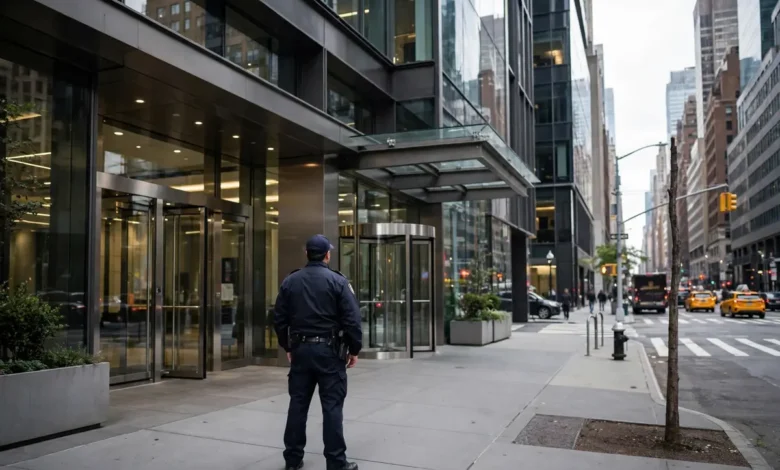
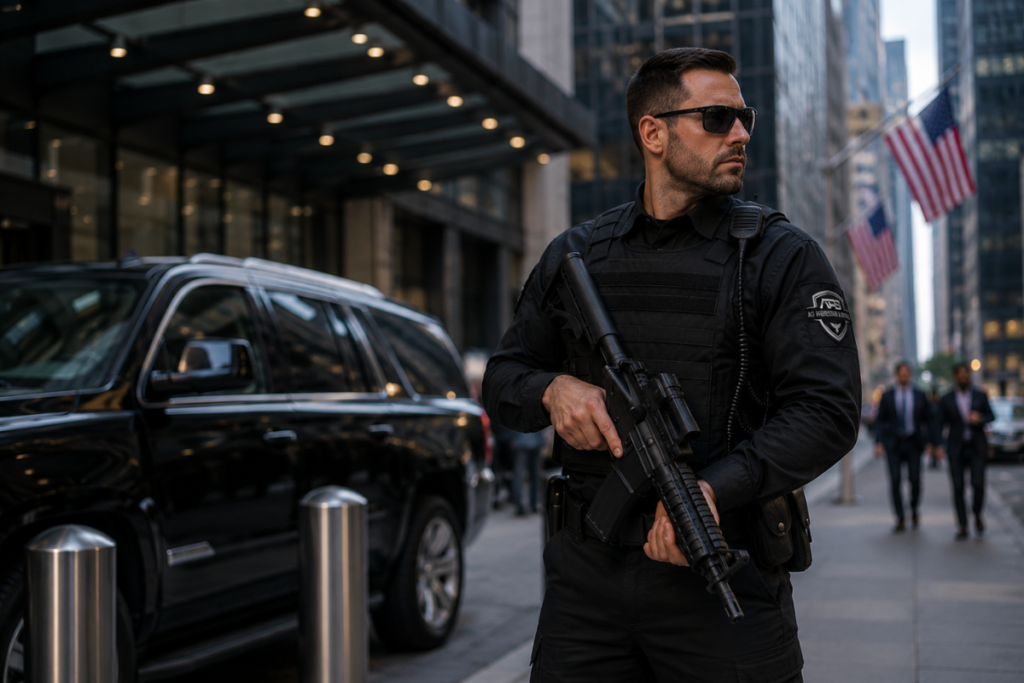
Some businesses and properties face security risks that go beyond routine access control, surveillance, or general deterrence. Facilities handling valuable assets, locations with documented threats, high-profile events, financial operations, and certain critical sites may require a higher level of protection. In these environments, armed security guards can become part of a broader security strategy when a professional risk assessment supports their use. Hiring armed personnel in New York, however, involves more than determining whether a visible security presence would be beneficial. Organizations should evaluate state registration requirements, firearms training, site-specific risks, guard experience, communication procedures, and how armed personnel will work alongside existing security systems.
Start With a Professional Security Risk Assessment
The decision to deploy armed security guards should be based on identifiable risks rather than assumptions or general concerns about crime.
A security assessment can examine factors such as:
- Previous thefts, threats, or violent incidents
- Value and type of assets stored on-site
- Cash-handling activities
- Number and location of entrances
- Employee and visitor traffic
- Operating hours
- Surrounding environmental conditions
- Parking and loading areas
- Existing CCTV and alarm coverage
- Emergency-response capabilities
Not every vulnerability requires an armed response. Better lighting, stronger access controls, surveillance improvements, physical barriers, or unarmed personnel may adequately address certain risks.
The objective is to determine whether the potential consequences and probability of a serious incident justify the additional responsibilities associated with armed protection.
Verify New York Registration and Training Requirements
New York regulates security guard work, and additional requirements apply when guards perform their duties while carrying firearms.
Under current New York State law, security guards generally must complete an eight-hour pre-assignment training course and at least 16 hours of on-the-job training within 90 working days after employment. They must also complete an eight-hour annual in-service training course.
For individuals seeking special armed guard registration, New York requires a 47-hour firearms training course. Current Department of State instructions also state that guards changing from unarmed to armed status must submit proof of completing the 47-hour course.
Training requirements provide an important baseline, but businesses should also verify that a guard’s registration is current before assigning personnel to a site.
Understand the Annual Firearms Training Requirement
Initial firearms qualification is not the end of the training process.
New York requires holders of special armed guard registration cards to complete additional annual firearms training. Current Department of State guidance specifies an eight-hour annual firearms course, which must be completed within one calendar year following the 47-hour firearms course and annually afterward.
The state’s licensing law separately lists both the standard eight-hour annual in-service course and an additional eight-hour annual course for holders of special armed guard registration cards.
Organizations considering armed security guards should therefore verify ongoing training rather than checking only whether someone completed an initial firearms course several years earlier.
Match Guard Experience to the Property
Licensing and training establish minimum standards, but the security requirements of a corporate office can differ significantly from those of a warehouse, retail property, residential development, or public event.
Site-specific experience can influence how effectively a guard performs everyday responsibilities.
For example, a guard assigned to a commercial building may need experience with visitor verification, employee credentials, loading areas, and after-hours access. A guard at an event may require stronger crowd-management and communication skills.
Businesses should consider whether personnel understand:
- The property’s physical layout
- Restricted areas
- Access-control procedures
- Emergency exits
- Alarm protocols
- Incident-reporting expectations
- Communication systems
- Emergency contacts
Well-prepared armed security guards should understand the environment before an incident occurs rather than learning critical procedures during an emergency.
Look Beyond Firearms Skills
Carrying a firearm does not eliminate the importance of communication, observation, judgment, and de-escalation.
Most security situations do not involve circumstances where a weapon is relevant. Guards are far more likely to encounter unauthorized visitors, access-control violations, disagreements, suspicious behavior, alarms, or individuals who need assistance.
Professional armed personnel should therefore demonstrate strong situational awareness and the ability to remain calm under pressure.
Important qualities include:
- Clear verbal communication
- Professional conduct
- Accurate incident reporting
- Attention to detail
- Conflict de-escalation
- Sound decision-making
- Reliability
- Knowledge of escalation procedures
The purpose of security is generally to reduce the likelihood of an incident becoming dangerous. Good judgment can therefore be as important as technical firearms proficiency.
Integrate Armed Guards With Existing Security Systems
Even highly trained armed security guards should not operate as the property’s only protective measure.
Modern physical security typically works best through layers. Cameras can expand visibility, electronic credentials can restrict access, alarms can identify potential intrusions, and physical barriers can make unauthorized entry more difficult.
Guards provide the human component needed to evaluate and respond to information produced by those systems.
For example, an access-control system may record repeated denied entry attempts. A guard can investigate the circumstances and determine whether the person needs assistance or is attempting unauthorized access.
Similarly, CCTV may reveal suspicious activity in a parking area, while personnel can physically assess the situation and follow appropriate response procedures.
This layered strategy reduces dependence on any one security measure.
Establish Clear Response and Escalation Procedures
Businesses should establish written procedures describing how security personnel should respond to different types of incidents.
Procedures may cover:
- Unauthorized access
- Threatening behavior
- Theft
- Workplace disputes
- Suspicious packages
- Medical emergencies
- Fire alarms
- Evacuations
- Requests for police assistance
Clear policies are particularly important for armed security guards because inconsistent decision-making can create unnecessary risk.
Guards should understand when to notify management, when to contact emergency services, how to preserve an incident scene, and how to document events accurately.
Businesses should also make sure employees know how to contact security quickly when they observe suspicious or threatening behavior.
Review Security Needs Regularly
The appropriate security level can change over time. A property that once required minimal coverage may experience new threats, longer operating hours, increased visitor traffic, or the introduction of more valuable assets.
The reverse can also be true. Temporary security measures introduced during a high-risk period may no longer be necessary after circumstances change.
Regular assessments help organizations determine whether armed security guards remain appropriate and whether staffing levels, patrol routes, access procedures, or supporting technology need adjustment.
Incident reports can be particularly useful because recurring problems may reveal vulnerabilities that require physical or procedural changes.
Conclusion
Choosing armed protection should be the result of a structured assessment rather than an automatic response to general security concerns. Organizations should examine credible threats, property vulnerabilities, New York registration requirements, firearms training, guard experience, and existing security systems before deciding on the appropriate level of coverage. Individual protection needs may sometimes call for a personal security guard when the primary risk follows a specific person rather than remaining tied to a fixed property. When the assessed risk justifies their presence, properly qualified armed security guards can strengthen a layered security strategy through professional monitoring, access control, incident response, and informed decision-making.
Before hiring, check the current rules directly: the New York Department of State publishes the official security guard requirements, including registration and training, on its website. For homes, the same layered thinking helps with entry points — see our guide on how to secure sliding doors.