
How to Secure Sliding Doors: Locks, Bars, and Anti-Lift Fixes That Actually Work

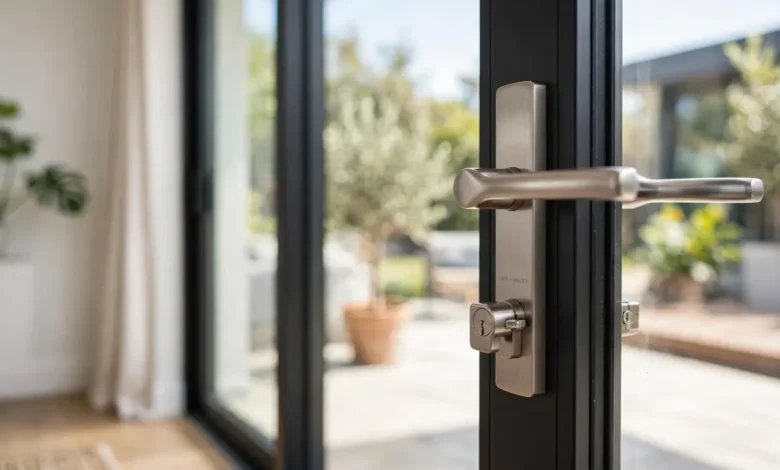
To secure a sliding door properly, stop it moving in two directions, not one. Add a secondary sliding door lock that pins the moving panel to the frame, fit anti-lift screws or blocks in the top track so the panel cannot be lifted off its rollers, and place a snug security bar in the bottom track. Then clean the track so the latch seats fully, protect the glass, and add a contact or glass-break sensor. That layered setup covers the three ways sliding patio door security usually fails: the latch gets pried, the panel gets lifted, or the glass gets broken.
Most factory latches were built for convenience, not force. They keep a door shut against wind, but they were never built to resist a tool in the frame or strong hands lifting from below. You rarely need a new door. Most fixes here fit the door you already have, and the first layer can be done tonight.
Why Sliding Doors Are an Easy Target
A sliding patio door usually sits at the back of the house, out of sight from the street. Hedges, fences, and patio furniture give someone cover while they work on it.
The design adds two problems. The moving panel rides on rollers in a bottom track, with extra space in the top track so it can be installed and removed. If nothing fills that space later, the panel can be lifted and tilted out. The standard lock is also weak: usually a single small hook that catches a strike plate. If the door has shifted, the track is dirty, or the screws are short, that hook may barely engage. Add a large glass pane that reveals what is inside, and you can see why this door needs more than its factory latch.
Do This 5-Minute Check First
Close and lock the door, then test it from inside.
Push up on the moving panel, hands low on the frame. If it rises noticeably or rattles in the top track, you need anti-lift protection. Next, try to slide the locked door with steady pressure. It should not creep open or flex from the jamb. If the latch pops, the strike plate and rollers may need adjustment.
Look at the track. Grit, pet hair, and small stones stop the panel closing fully, and a door sitting a few millimetres short will not lock properly. Finally, check the fixed panel. It should not move at all. If it wobbles, secure it as the maker directs or ask a glazier to refit it.
Start With the Main Sliding Door Lock
Your primary lock lives in the handle set or the edge of the moving panel. On many doors this is a mortise lock, set into a pocket in the door edge, with a hook that turns into the frame. Worn springs, a bent hook, and a misaligned keeper are common on older doors.
If the handle feels loose or you have to lift the door to make it latch, fix alignment first. Clean the track, check the roller height screws at the bottom of the panel, and tighten the keeper screws. Longer screws that reach deeper into the framing hold better than short screws in thin metal or vinyl, but do not over-tighten and distort the frame.
Should You Upgrade to a Multi-Point or Keyed Lock?
A multi-point lock engages at two or three places along the frame instead of one, spreading force and making prying harder. It suits a newer door or a replacement. Retrofitting one to an older frame is not always simple and may need a specialist.
A keyed handle set lets you lock from outside, which suits a patio door used as a regular entrance. Measure door thickness, screw spacing, and backset before you order. A lock that almost fits will never sit right.
One warning matters. A double-cylinder lock needs a key on both sides. It can stop someone reaching in through broken glass, but it can also slow escape in a fire if the key is not nearby. If you choose it, keep the key in a fixed place near the door, out of reach from outside glass, and make sure every adult knows where it is. For most families, a single-cylinder lock plus glass protection and a secondary lock is a safer balance.
Add a Secondary Lock: Pin, Loop, and Foot Options
A secondary lock is a separate locking point that holds even if the main latch fails. Choose by how you use the door and whether you can drill the frame.
| Lock type | How it holds | Best for | Main limit |
|---|---|---|---|
| Pin lock | Steel pin through moving frame into fixed frame | Most patio doors | Needs drilled hole, careful alignment |
| Loop lock | Loop or double bolt clamps moving to fixed panel | Second lock high or low | Check metal body and screws |
| Foot bolt | Bolt at bottom rail drops into sill plate | Hands-free, strong low lock | Sill hole must stay clear |
| Security bar | Bar blocks track or braces frame | Renters, nightly layer | Inside use only |
| Track dowel | Cut rod sits in bottom track | Low-cost first step | No lift protection |
Pin Locks
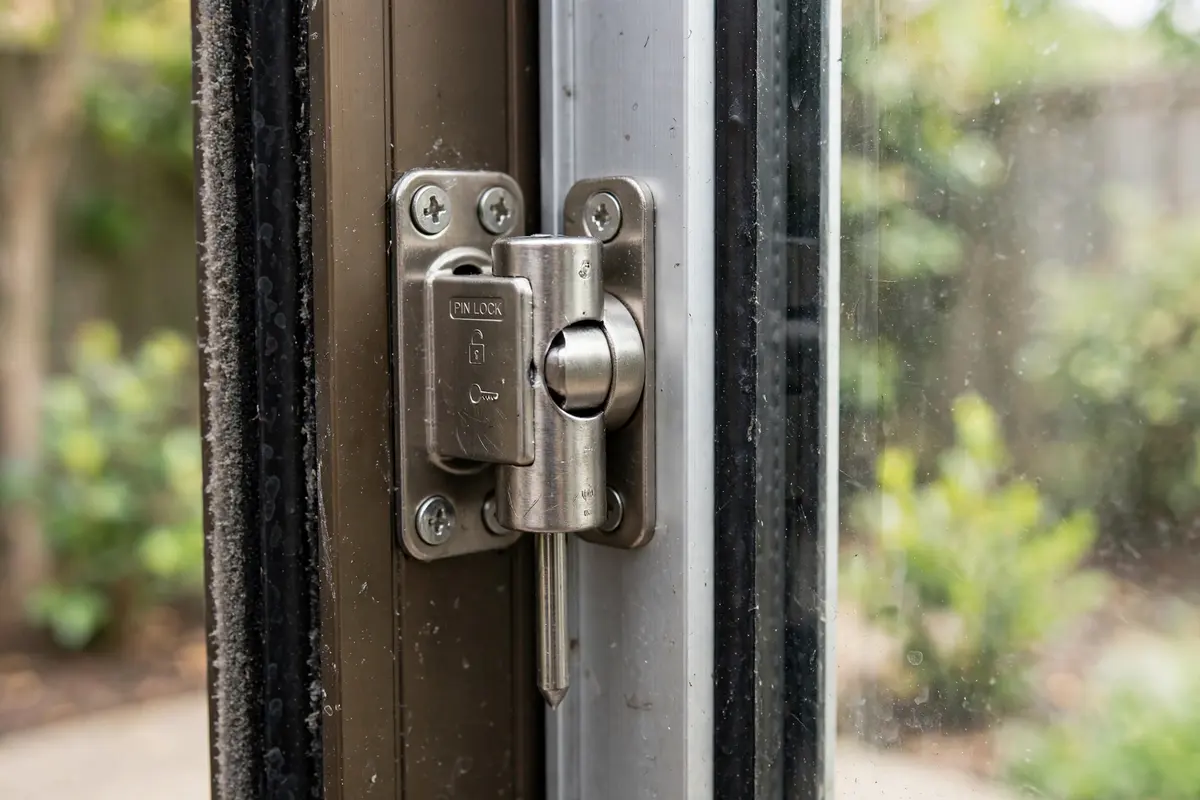
You drill a hole through the inner moving frame into the fixed frame behind it, then slide a hardened pin through both. The frames are tied together, so the panel cannot slide and is much harder to lift.
Fit the pin where frames overlap in solid material, not glass. Mark with the door closed and locked, drill straight, and test it. Some pin locks are keyed, others use a pull pin on a small chain so it does not get lost. Keep the hole clean, because a pin that goes only halfway in gives false security.
Loop Locks and Double-Bolt Locks
A loop lock mounts on the face of the moving panel and bolts into a receiver on the fixed panel or jamb. It is visible, easy to use, and useful placed out of a small child’s reach near the top. Consider two on a wide or exposed door, one high and one low. Look for a metal body and a bolt that fully engages the receiver. Thin plastic and tiny screws will not hold under force.
Foot Bolts
A foot bolt sits on the bottom rail. Press it with your foot and a bolt drops into a hole or plate in the sill. Locking low resists lifting and prying at the bottom corner, where force is often applied. It suits frequent use, because you can work it without bending down. The sill hole must line up exactly and will collect dirt, so brush it out during track cleaning. If your sill is thin or damaged, ask a fitter if this type suits your door.
Use a Security Bar the Right Way
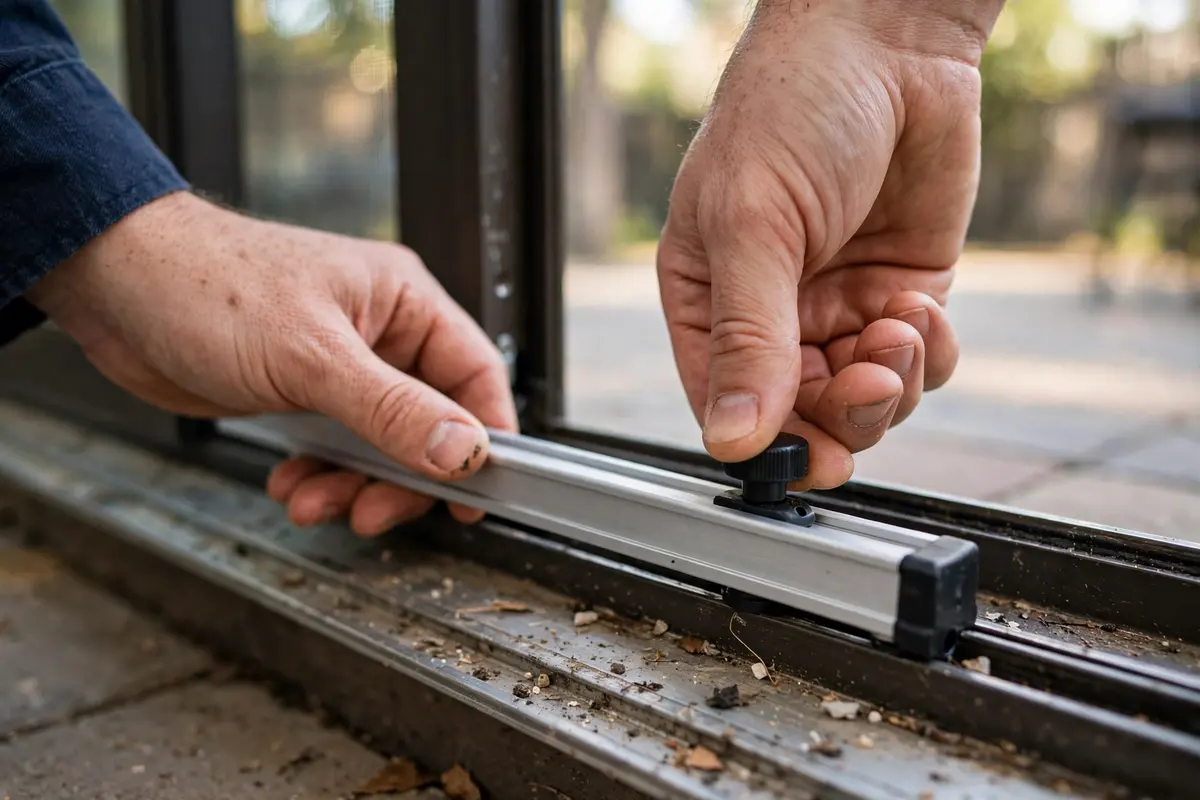
A track bar or dowel lies in the bottom track behind the moving panel. Cut it snugly between the closed panel and the frame, with almost no gap. A short, loose rod can bounce out or leave room for the door to gain momentum. A purpose-made metal bar stays put better than a random offcut, but a well-cut wood dowel is far better than nothing.
A Charley bar works differently. It mounts to the side jamb at about handle height, then folds down so its end rests against the moving panel, bracing the door across its width. It folds up when you open the door. Fit brackets into solid frame and test that it cannot be shaken loose.
Remember the limit: a bar works only from inside. Use it at night and when you are home. Rely on locks, anti-lift protection, and sensors when you go out, and never leave a setup that blocks a fire exit for someone who does not know how to remove it.
Stop the Lift: Anti-Lift Screws and Blocks
This fix is often missed, and it is often the cheapest. The top track is deeper than the panel needs day to day, so the panel can be raised until the bottom clears the track lip.
Anti-lift blocks fill part of that gap. They are small blocks of wood, metal, or plastic fitted inside the top track above the moving panel. Anti-lift screws do the same job: drive large pan-head screws up into the top track, spaced along its length, leaving the heads low enough to block lift but high enough that the panel just clears them as it slides.
Adjust one screw at a time and slide the door under it to test. The panel should move freely without scraping, but should not rise when you lift it. If it binds, back the screw out a fraction. Do not skip this because you fitted a strong lock. A lock ties the panel sideways, anti-lift protection ties it down, and you need both.
Keep the Track Clean So the Lock Can Work
Grit wears rollers flat, stones stop the panel short, and water in the track can corrode metal parts. Vacuum the bottom track with a narrow nozzle, wipe it with a damp cloth, and use an old toothbrush for the corners. Wash with mild soapy water if mud has built up, then dry the track fully. Avoid flooding it, as water can run under thresholds and damage flooring nearby. The same care you use when you learn how to clean hardwood floors without leaving residue helps here: use little water, wipe it up at once, and never drag grit across the surface.
After cleaning, check the rollers. A panel that rocks or drags on one side may need roller adjustment or new rollers. Lubricate only as the maker directs. Many tracks run best dry or with dry silicone, while heavy oil attracts dust. Test the latch last. Often, cleaning plus a small roller adjustment is what makes an unreliable lock engage fully again.
Protect the Glass Without Ruining the Light
No lock matters if someone can break the glass, reach in, and release it. Security film is a clear film on the inside face of the glass. It holds broken pieces together so the pane does not fall out in one go. Film delays entry and makes it louder, but it does not make glass unbreakable. Strength depends on film type, glass type, and whether edges are anchored to the frame, so ask an installer what to expect on your door.
Laminated glass is stronger. A plastic layer bonded between glass layers helps a broken pane stay in the frame. Get a glazier to measure before ordering a replacement unit, as frame depth and safety rules vary. Tempered glass is different: it breaks into small blunt pieces and resists impact better than ordinary glass, but it does not hold together like laminated glass.
Close curtains and blinds at night and when you are out, so people outside cannot easily see valuables, locks, or whether anyone is home.
Add Sensors, Light, and a Clear View Outside
Hardware slows entry. Detection tells you entry is being tried.
A contact sensor has one part on the moving panel and one on the frame. When the door opens, the parts separate and your system can sound an alarm, send an alert, or turn on lights. Fit it where panel and frame sit flush and test it closed. A glass-break sensor listens for breaking glass, while a vibration sensor reacts to sharp impacts on the pane. Place and test them as the maker directs to limit false alarms.
Outside, motion-activated lighting removes cover at the patio. Trim shrubs that hide the door and keep the approach visible. A camera can deter and record, but it does not physically stop entry.
Think of entry points together. The same week you harden the patio door, check the garage, side door, and home-office PC. If that computer still runs an older system, read up on Windows 10 end of life and plan its upgrade, so a secured house is not let down by an unsupported machine.
Renters and No-Drill Options
If you rent, you may not be allowed to drill the frame or change the handle set. You can still do a lot. Use a snug track bar, adhesive contact sensors that remove cleanly, and curtains on a tension rod. Ask in writing for permission to add a pin lock or anti-lift screws. Landlords often agree, because the holes are small, sit inside the track, and protect their property too. Check that any device still lets you open the door fast in an emergency, and leave the original latch working when you move out.
When Repair Is No Longer Enough
Some doors cannot be secured well because the frame has failed. Look for cracked or rotten framing, a track bent along its length, a panel that will not sit square after roller adjustment, or a failed glass unit. A lock on a warped frame will keep working loose.
The same judgement applies to other large openings. Our guide on what usually prompts a homeowner to replace a garage door rather than repair it covers that repair-versus-replace line in detail, and the thinking transfers well: repair sound frames, replace the unit when structure or repeated failures make patching wasteful.
If you replace the door, buy security at that stage: multi-point lock, anti-lift features in the head track, laminated glass as an option, and solid fixing points. Ask how the panel is removed for maintenance. If it lifts out easily with nothing to undo, ask what stops it lifting out from outside.
A Layered Plan, in Order
Tonight, clean the track, test the latch, and cut a track bar to a snug fit. This week, fit anti-lift screws or blocks and add one secondary lock, a pin lock for most doors, plus a contact sensor. This month, get quotes for anchored film or a laminated unit if the door is exposed, check fixed panel fixings, and review outside lighting and planting.
Then keep a simple habit: lock the latch every time, drop the bar in at night, vacuum the track every few months, and test every lock after adjusting rollers or weather strips.
Avoid the common mistakes: relying on the factory latch alone, cutting a dowel too short, forgetting the fixed panel, and overlooking escape. Every lock and bar must open quickly from inside without a hidden key or tool. Signs and stickers add no resistance, so put hardware in first and let detection support it.
Frequently Asked Questions
Is a wood dowel enough to secure a sliding door?
No, not alone. A snug dowel stops sliding, so it is a good first layer, but it does nothing against lifting and does not help if glass is broken. Pair it with anti-lift screws or blocks and a pin lock or loop lock.
Can burglars really lift a sliding door off its track?
Yes, on many older doors. The top track has extra depth for fitting, and if that space stays open the panel can be lifted until the bottom clears the track. Test yours by lifting the closed, locked panel. If it rises more than a small amount, fit anti-lift blocks or screws until movement is taken up but the door still slides freely.
What is the best sliding door lock for a patio door used every day?
A well-aligned mortise or keyed handle lock plus a foot bolt works well for daily use, because both are quick and the foot bolt adds a strong low point. If you want the second lock higher, out of a child’s reach, choose a metal loop lock or keyed pin lock instead. Fit matters more than brand.
Can I secure a sliding patio door without drilling?
Yes, up to a point. A track bar, adhesive sensors, and curtains need no drilling and suit renters. They stop sliding and add warning, but true anti-lift protection needs screws or blocks in the top track, so ask your landlord for written permission if lift is your main risk.
Does security film make sliding door glass burglar-proof?
No. Film holds broken glass together and slows entry, sometimes long enough that an intruder gives up, but a determined person can still force through given time. Film works best with strong locks, anti-lift protection, and a glass-break sensor.
Should I replace my sliding door just to make it secure?
Usually not. If the frame is square, the track is straight, and the panel rolls well after cleaning, secure the existing door with a secondary lock, anti-lift fix, track bar, and sensor or glass upgrades. Replace it when the frame is cracked, rotten, or warped, or when lock and roller repairs keep failing.