

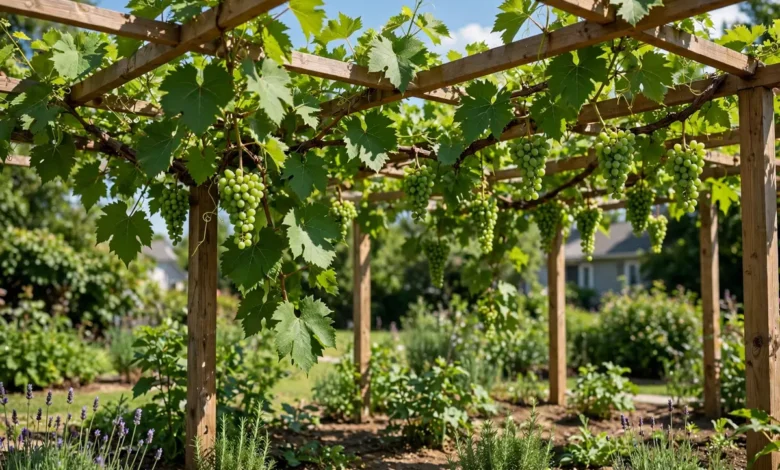

Grapevines are vigorous climbing plants that can provide both ornamental value and edible fruit in suitable growing conditions. With their distinctive leaves, climbing habit, and clusters of grapes, grape vines can be trained against walls, fences, pergolas, arches, or dedicated support systems. Successful cultivation depends on selecting a suitable variety, providing adequate sunlight, preparing well-drained soil, and maintaining a consistent pruning and training routine.
The Royal Horticultural Society notes that grapevines need a warm, sheltered, sunny position for reliable fruit production, with additional protection such as a greenhouse being useful in cooler conditions.
What are Grape Vines?
Grapevines belong to the genus Vitis, which includes species and cultivated varieties grown for table grapes, wine production, juice, and ornamental purposes.
They are woody perennial climbers capable of producing substantial new growth during the growing season. Without training and pruning, a vine can spread considerably and develop tangled growth.
Their climbing nature makes them particularly useful for vertical and overhead garden structures. A suitable support gives the vine a framework on which its permanent stems and fruiting shoots can develop.
Where Should You Plant Grape Vines?
Location is one of the most important considerations when growing grapes.
Grapevines generally perform best in a warm, sheltered position with plenty of sunlight. A sunny wall or fence can provide additional warmth and support, while a pergola can provide room for the vine to spread.
The RHS recommends a sunny aspect and notes that grapevines grow well in a range of soils as long as the ground drains freely and does not become waterlogged. A soil pH around 6.5 to 7 is also suitable.
Avoid areas where cold air collects or where late spring frosts are common, particularly because young shoots can be vulnerable to frost damage.
What Soil Do Grapevines Need?
Good drainage is particularly important. Grapevines do not perform well in persistently waterlogged soil because excess water can limit oxygen around the roots.
Before planting, assess the soil’s drainage and structure. If the soil is poor, incorporating suitable organic matter can improve growing conditions.
The RHS recommends planting vines during their dormant period and incorporating garden compost into poor soil where appropriate.
However, excessive feeding is not necessarily beneficial. Grapevines need sufficient nutrients for healthy growth, but excessive vegetative growth can compete with fruit production.
When is the Best Time to Plant Grape Vines?
Planting during dormancy is generally preferred because the plant is not actively producing new shoots.
For outdoor cultivation, the RHS recommends planting from late autumn through early spring, provided the soil is not frozen or waterlogged. Early spring can be particularly useful in colder areas because it reduces the exposure of young plants to winter conditions.
Container-grown plants can be handled according to their growing conditions, but planting during a suitable dormant or mild period can still make establishment easier.
How Do You Support a Grapevine?
A strong support system should be installed before or during planting because mature vines can become heavy.
Possible support structures include:
- Horizontal wires
- Fences
- Walls
- Pergolas
- Arches
- Posts and wire systems
- Greenhouse frameworks
For outdoor cordon systems, the RHS recommends sturdy posts and galvanized wires arranged at suitable heights to accommodate developing shoots.
The support should be strong enough to handle both the woody framework and the weight of developing fruit.
Why is Pruning Important?
Pruning is one of the most important maintenance tasks for grape vines. Grapevines are vigorous, and uncontrolled growth can produce excessive foliage and tangled shoots.
Regular pruning helps control the plant’s size and directs growth toward productive areas.
The main structural pruning is generally carried out while the vine is dormant. Additional trimming, shoot training, leaf management, and fruit thinning take place during spring and summer.
Pruning should always be based on the training system being used.
What is Cordon Training?
Cordon training creates one or more permanent stems from which shorter fruiting spurs develop.
This system is versatile and can be used outdoors against walls, along fences, over arches, or inside greenhouses. It can also help make efficient use of limited space.
According to the RHS, a single cordon can be trained vertically, while multiple cordons can be arranged vertically or horizontally depending on the available structure.
The key is maintaining a permanent framework while regularly managing the shoots that develop from it.
What is Guyot Training?
Guyot training is another established system used for grapevines. It is particularly associated with vineyard-style growing but can also be used in gardens and allotments.
The method uses selected fruiting canes and replacement spurs that are renewed through pruning. This creates a structured framework that can be maintained from year to year.
The most appropriate training system depends on the available space, variety, climate, and intended use of the grapes.
How Often Should Grapevines Be Watered?
Newly planted vines need attention while they establish their root systems. Watering is particularly important during dry periods in the first growing season.
Once established outdoors, grapevines generally have lower supplemental watering requirements when growing in suitable soil. However, plants positioned against walls or fences may receive less rainfall and can require additional water.
Container-grown vines typically require closer monitoring because containers have limited soil volume and can dry out more quickly.
Water deeply when needed rather than relying only on frequent, shallow applications.
How Can You Encourage Better Fruit Production?
Fruit production depends on variety, growing conditions, pruning, pollination, and plant maturity.
Managing the number of fruit clusters can be useful because excessive cropping can place greater demands on the vine and may affect fruit development.
The RHS recommends removing some flowers and fruit from young vines so the plants can concentrate on establishing themselves. As vines mature, crop levels can gradually increase.
For established vines, thinning crowded bunches can also improve airflow and allow remaining grapes to develop more evenly.
Can Grape Vines Be Grown in Containers?
Yes. Container growing can be useful when garden space is limited or when a gardener wants greater control over the growing environment.
A compact training system known as a standard can be used for container-grown vines. This produces a clear main stem topped by a rounded framework of branches.
The RHS identifies standard-trained vines as a practical option where space is limited, although they generally produce a more modest crop than larger trained plants.
Containers should be sufficiently large and stable, and the vine needs appropriate support.
How Do You Care for Grapevines During the Growing Season?
Spring and summer maintenance focuses on managing the vigorous new growth.
Tasks can include:
- Tying shoots to supports
- Removing unwanted shoots
- Managing excessive foliage
- Thinning fruit clusters
- Maintaining adequate airflow
- Monitoring for pests and diseases
- Watering during dry periods
- Providing appropriate nutrition
The objective is to maintain a balanced canopy that receives adequate sunlight while keeping fruit accessible and well ventilated.
In greenhouse environments, ventilation is particularly important because warm, humid conditions can encourage fungal problems.
How Do You Choose the Right Grapevine?
Variety selection should be based on the intended use and local growing conditions.
Consider whether the grapes are intended for:
- Fresh eating
- Juice
- Wine
- Decorative purposes
Also consider the vine’s expected mature size, fruiting period, disease resistance, climate suitability, and required training system.
A suitable variety for one region may not perform identically in another, so local growing conditions should be considered before purchasing.
Conclusion
Grape vines can be rewarding additions to gardens when they are given adequate sunlight, suitable drainage, strong support, and regular maintenance. Their vigorous growth makes pruning and training especially important, while thoughtful crop management can help support healthy fruit development. Gardeners should select varieties according to their climate, available space, intended use, and preferred training system. Container growing can also provide an option for smaller gardens when the vine is trained appropriately. With proper site selection, planting, watering, pruning, and seasonal care, grape vines can become long-term garden features that provide both attractive foliage and harvestable fruit. Starting with a healthy specimen from a reputable plant nursery can also help gardeners establish their plants with greater confidence. Check the cultivar name and understand its expected characteristics before planting. Named cultivars are generally propagated vegetatively because growing them from seed does not reliably reproduce the same characteristics.
Caring for a home and garden is full of repair-or-replace calls, from worn tools to ageing fixtures, and this overview of when to replace a garage door rather than repair it shows how homeowners weigh that choice.
In short, grape vines reward patience: plant grape vines in a sunny, sheltered spot, train them onto strong supports, and prune every year to keep growth productive and healthy.
Related Reading
For another elegant garden plant to consider, our article Italian Cypress: The Elegant Evergreen That Elevates Every Landscape looks at a classic evergreen choice for landscapes.
For help feeding flowering plants, Rose and Flower Fertilizer: A Complete Guide for Healthy Blooms explains how to support healthy blooms.