

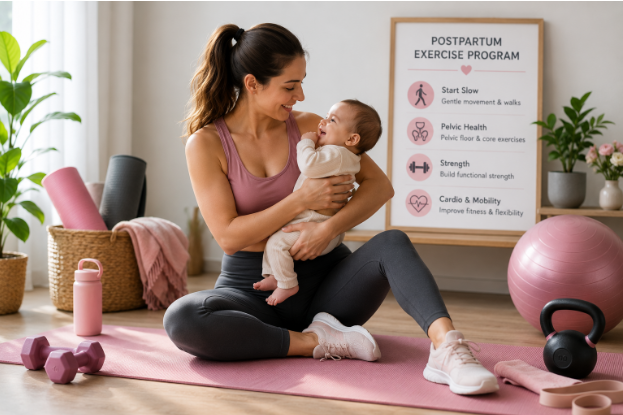
Returning to physical activity after childbirth is not about rushing back to a pre-pregnancy routine. The postpartum period involves substantial physical and lifestyle changes, and exercise needs to account for recovery, sleep, feeding, pelvic health, delivery type, and individual medical circumstances. A thoughtfully structured postpartum exercise program can help new mothers gradually rebuild strength, mobility, cardiovascular fitness, and confidence.
Current guidance from the World Health Organization recommends that postpartum women without contraindications undertake regular physical activity and gradually work toward at least 150 minutes of moderate-intensity aerobic activity each week. It also recommends incorporating muscle-strengthening activities and reducing prolonged sedentary time.
Why Exercise Matters After Pregnancy
Physical activity can support several aspects of postpartum wellbeing. According to the American College of Obstetricians and Gynecologists (ACOG), exercise after pregnancy can help strengthen abdominal muscles, increase energy, support sleep, reduce stress, and may help prevent postpartum depression.
Exercise is also valuable for restoring everyday functional strength. Carrying a baby, lifting a car seat, pushing a stroller, getting up from the floor, and performing household tasks can place repeated demands on the body.
However, postpartum exercise should not be viewed solely as a way to lose pregnancy weight. Recovery, strength, mobility, cardiovascular health, and pelvic-floor function are equally important considerations.
When Can You Start Exercising After Childbirth?
There is no single starting date that applies to every woman.
ACOG states that people who have had a healthy pregnancy and uncomplicated vaginal delivery can generally begin exercising again within a few days after giving birth, or as soon as they feel ready. Those who have had a cesarean birth or complications should ask their obstetrician-gynecologist when it is appropriate to resume exercise.
The WHO similarly recommends a gradual return to physical activity after childbirth, with clinical guidance particularly important following cesarean birth or when pregnancy or delivery complications are present.
This makes individual assessment more important than following a rigid timeline found online.
Start With Gentle Movement
For many new mothers, walking is one of the simplest ways to reintroduce movement.
Short walks can be divided throughout the day rather than completed as one long session. ACOG notes that even 10-minute periods of exercise can provide benefits and recommends gradually increasing activity.
Gentle mobility work can also be useful. Depending on individual recovery, this may include comfortable range-of-motion exercises, light stretching, breathing exercises, and basic pelvic-floor activation.
The goal during the early stage is consistency rather than intensity.
What Should a Postpartum Exercise Program Include?
A well-designed program should progress through several areas rather than focusing exclusively on one type of exercise.
Walking and Cardiovascular Activity
Walking provides a low-impact way to develop cardiovascular fitness. Intensity can gradually increase as recovery progresses.
Eventually, moderate-intensity aerobic activities may include brisk walking, cycling, swimming, or other suitable forms of exercise, depending on medical clearance and individual comfort.
Strength Training
Strength exercises can help rebuild the muscles used for lifting, carrying, squatting, reaching, and everyday activities.
A gradual program may eventually incorporate movements such as squats, rows, hip hinges, presses, and controlled core exercises. The starting level should reflect the individual’s current strength and recovery rather than previous fitness.
Pelvic-Floor Exercises
Pelvic-floor exercises can play an important role after childbirth. ACOG notes that Kegel exercises can help tone pelvic-floor muscles and that pelvic-floor exercises can be initiated in the immediate postpartum period.
However, pelvic-floor problems are not always caused by weakness. Some people may experience excessive pelvic-floor tension or difficulty coordinating contraction and relaxation. Persistent symptoms may warrant assessment by a qualified pelvic-health physiotherapist.
Core Rehabilitation
Pregnancy can change abdominal wall mechanics and trunk strength. Rather than immediately returning to high-intensity abdominal exercises, many people benefit from rebuilding coordination and control first.
ACOG’s clinical guidance notes evidence that certain abdominal strengthening exercises can reduce the incidence of diastasis recti and decrease the distance between the abdominal muscles.
Exercise selection should still be individualized, particularly when there is pain, significant abdominal separation, pelvic-floor dysfunction, or other symptoms.
How Should Exercise Progress?
Progression should generally be gradual.
One practical approach is to increase one variable at a time. For example, someone might first increase walking duration before increasing speed. With strength training, increasing repetitions or improving movement control may come before adding substantial resistance.
The WHO specifically recommends starting with small amounts of physical activity and gradually increasing frequency, intensity, and duration.
This approach is particularly useful during the early months when sleep and recovery can vary considerably from day to day.
What About High-Intensity Exercise?
People who were highly active before pregnancy may eventually return to vigorous exercise, but that does not mean they should immediately resume their previous training volume.
ACOG states that people who were habitually engaged in vigorous aerobic activity before pregnancy can continue such activities during the postpartum period when medically appropriate.
For someone returning after a period of reduced activity, however, the transition should be progressive.
Running, jumping, heavy lifting, intense abdominal training, and high-impact workouts can place greater demands on the pelvic floor and musculoskeletal system. Symptoms should guide progression, and persistent problems should be assessed rather than ignored.
Signs That You May Be Doing Too Much
Pain is an important reason to stop or modify an exercise.
Other symptoms that deserve attention can include unusual bleeding, significant pelvic pressure or heaviness, urinary or fecal leakage, worsening pelvic pain, persistent abdominal discomfort, or a noticeable increase in postpartum symptoms following exercise.
ACOG advises stopping exercise if pain occurs, while WHO recommends seeking guidance from a qualified health worker when warning signs or contraindications are present.
Postpartum recovery should not be treated as a test of endurance. More exercise is not automatically better.
How Does Breastfeeding Affect Exercise?
Breastfeeding does not generally prevent someone from exercising.
ACOG reports that regular aerobic exercise in lactating women can improve maternal cardiovascular fitness without affecting milk production, composition, or infant growth. It also recommends feeding or expressing milk before exercise if breast fullness causes discomfort and maintaining adequate hydration.
A supportive, well-fitting sports bra can also improve comfort during activity.
Nutritional needs should be considered separately, particularly for women who are breastfeeding and exercising regularly.
How Can New Mothers Find Time to Exercise?
Time is often one of the biggest barriers to postpartum activity.
Instead of expecting uninterrupted hour-long workouts, new mothers can divide exercise into shorter sessions. A 10-minute walk, a brief strength session, and several mobility exercises can collectively contribute to daily activity.
ACOG specifically notes that physical activity can be divided into shorter sessions throughout the day.
Baby-friendly classes, stroller walks, home workouts, or scheduling exercise around another caregiver’s availability can also make consistency easier.
Why Individualized Guidance Can Help
Postpartum recovery differs considerably from one person to another. Delivery method, pregnancy complications, previous injuries, fitness history, pelvic-floor symptoms, abdominal changes, and current energy levels can all influence exercise choices.
A qualified healthcare professional can identify medical considerations, while an appropriately trained exercise professional can help develop a progressive routine.
This is particularly relevant for anyone experiencing persistent pain, pelvic-floor symptoms, significant weakness, or uncertainty about returning to high-impact exercise.
What Does a Sustainable Routine Look Like?
A sustainable routine does not have to be complicated.
For example, an individual who has been medically cleared and is comfortable exercising might gradually build toward regular walking or other aerobic activity, two weekly strength sessions, pelvic-floor work as appropriate, and gentle mobility.
The WHO recommendation of 150 minutes of moderate activity per week is a target rather than a requirement that must be achieved immediately. The organization emphasizes gradual progression and notes that some activity is beneficial for people who are not yet reaching the recommended amount.
The most useful routine is one that can be maintained while accounting for sleep, childcare, recovery, and other demands of life with a newborn.
Conclusion
A safe postpartum exercise program should focus on gradual recovery rather than rapid return to pre-pregnancy performance. Walking, progressive strength training, appropriate pelvic-floor exercises, mobility work, and eventually more demanding aerobic activities can all have a place depending on individual recovery. For anyone considering a post partum exercise program, the most important step is to match exercise intensity and progression to their medical circumstances and current abilities. WHO and ACOG both support regular physical activity during the postpartum period when there are no contraindications, while emphasizing gradual progression and appropriate professional guidance when complications are present. A sustainable approach can help new mothers rebuild physical capacity while recognizing that postpartum recovery is a process rather than a deadline.