
Cash remains an important part of everyday commerce, even as digital payment methods continue to expand. For retail businesses, providing convenient access to cash can be useful when customers need withdrawals while shopping. However, installing an ATM involves more than simply purchasing a machine and placing it near a checkout counter. Location, security, connectivity, cash management, accessibility, maintenance, and applicable regulations all need to be considered.
For businesses evaluating retail ATMs, the first step is understanding how the equipment will fit into the store’s operations and customer environment. A properly selected and maintained ATM can provide reliable cash access, while a poorly planned installation can create unnecessary operational and security challenges.
What Are Retail ATMs?
Retail ATMs are automated teller machines positioned in commercial environments such as stores and other customer-facing locations. Unlike ATMs located inside traditional bank branches, these machines can be placed closer to consumers in everyday shopping environments.
According to the Reserve Bank of India, an ATM is a computerized machine that allows customers to access their accounts for cash withdrawals and other financial or non-financial transactions without visiting a bank branch. RBI also distinguishes White Label ATMs, which are established, owned, and operated by non-bank entities.
The exact services available depend on the machine, network, operator, and applicable regulations. Some ATMs may provide account information, cash withdrawal, mini statements, PIN changes, and other permitted services.
Why Does ATM Placement Matter in a Retail Store?
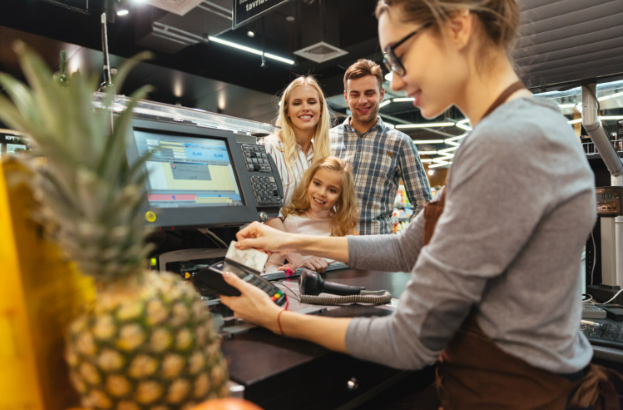
The usefulness of an ATM depends heavily on where it is installed. A machine should be easy for customers to locate while still providing enough privacy for financial transactions.
Retailers should consider customer traffic patterns, entrance and exit points, checkout areas, lighting, available floor space, and accessibility. The machine should not obstruct aisles, emergency exits, or other essential areas.
Visibility is also relevant to security. An ATM located in a well-observed part of a store may benefit from existing staff oversight and surveillance systems. At the same time, customers should have enough space to complete transactions without unnecessary exposure to other shoppers.
Businesses should also consider operating hours. If a store operates for extended hours, an ATM may provide customers with cash access during periods when nearby bank branches are closed.
What Features Should You Look For?
When comparing retail ATMs, buyers should examine the machine’s technical specifications rather than focusing only on purchase price.
Important features can include:
- Cash capacity and cassette configuration
- Card-reading technology
- PIN keypad security
- Display and user interface
- Receipt printer
- Network connectivity
- Remote monitoring capabilities
- Anti-skimming technology
- Software and operating-system support
- Physical security features
- Accessibility considerations
Technology also needs to remain supported over the machine’s operating life. RBI directions for regulated entities emphasize measures such as applying current software patches, using supported operating-system versions, implementing anti-skimming measures, and maintaining appropriate terminal security.
Therefore, a machine that appears inexpensive initially may not be a practical choice if it is difficult to update, service, or secure.
Security Should Be a Primary Consideration
An ATM contains cash and processes sensitive financial transactions, making security essential. Physical protection should include appropriate anchoring, controlled access, surveillance, and protection against unauthorized tampering.
Indian government information on ATM safety has highlighted measures including secure locking arrangements, anchoring ATMs to appropriate structures, and electronic surveillance.
Digital security is equally important. ATM operators and service providers need to consider software updates, network protection, transaction monitoring, encryption, and anti-skimming capabilities. Security should be evaluated before installation rather than treated as an upgrade after an incident occurs.
For retailers, the surrounding store environment can also contribute to security. Existing CCTV coverage, adequate lighting, staff visibility, and controlled access can all support safer operation.
How Important Is Cash Management?
An ATM can only serve customers effectively when it has sufficient cash. Cash-outs can make a machine temporarily unavailable, reducing its usefulness.
The RBI has specifically required banks and White Label ATM operators to strengthen mechanisms for monitoring cash availability and ensuring timely replenishment to reduce ATM downtime caused by cash-outs.
Retail businesses therefore need a clear understanding of who is responsible for cash replenishment, monitoring cash levels, reconciliation, and responding to machine faults.
Cash handling also needs appropriate security procedures. RBI guidance on ATM cash management has emphasized secure transportation, trained personnel, and controlled cash-handling processes for relevant banking operations.
Before selecting equipment, retailers should understand the expected transaction volume and determine how frequently the ATM may require replenishment.
Should You Buy New or Used Equipment?
Businesses researching retail ATMs may encounter both new and previously used machines. Each option can have different financial and operational implications.
A used machine may have a lower initial cost, but its age, condition, software compatibility, service history, and availability of replacement parts should be examined carefully. Equipment that requires frequent repairs can create more downtime and higher long-term costs.
Newer equipment may offer more current security features and technical support, but the purchase price can be higher. The right decision depends on the retailer’s expected usage, budget, location, support arrangements, and operational requirements.
Instead of comparing machines solely by price, businesses should consider the total cost of ownership.
What Should You Know About ATM Cash Machines for Sale?
When reviewing ATM cash machines for sale, retailers should look beyond photographs and basic specifications. Important questions include whether the equipment is compatible with the intended network, whether required certifications or approvals are in place, how maintenance will be handled, and whether replacement components remain available.
Buyers should also clarify installation requirements, power requirements, network connectivity, warranty terms, software support, and servicing responsibilities before making a decision.
A detailed evaluation can help identify whether a particular machine is appropriate for the store’s environment rather than simply appearing attractive because of its price or appearance.
Conclusion
Installing an ATM in a retail environment requires careful planning. The most suitable equipment should match the store’s available space, customer traffic, security environment, connectivity, cash requirements, and maintenance capabilities. Businesses considering retail ATMs should evaluate both the machine and the operational system surrounding it. Reliable cash replenishment, effective security, appropriate placement, software support, and regular maintenance can be just as important as the ATM’s basic dispensing capabilities. In the middle of that evaluation, understanding ATM cash machines for sale is only one part of the decision. A well-informed retailer should compare specifications, operating requirements, security features, service arrangements, and long-term costs before selecting equipment. This approach can help ensure that the ATM remains a useful and dependable part of the retail environment.