
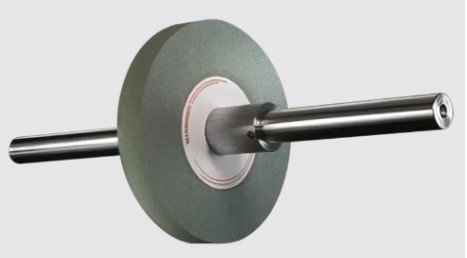
Surface finishing plays a critical role in modern manufacturing, influencing the quality, appearance, and performance of finished products. Industries such as automotive, aerospace, metal fabrication, and precision engineering rely on specialized abrasive tools to achieve smooth surfaces, remove imperfections, and maintain tight dimensional tolerances. Among the many abrasive products available, the rubber abrasive wheel is widely recognized for its ability to deliver controlled material removal while producing a consistent surface finish.
A rubber abrasive wheel combines abrasive grains with a flexible rubber bond, allowing it to conform to the workpiece while minimizing excessive heat generation and surface damage. This unique construction makes it particularly suitable for precision finishing, deburring, polishing, and light grinding applications where accuracy and surface quality are essential. Its flexibility also helps reduce vibration and chatter, contributing to more consistent finishing results.
What Is a Rubber Abrasive Wheel?
A rubber abrasive wheel is a bonded abrasive tool in which abrasive particles—commonly silicon carbide or aluminum oxide—are embedded within a durable rubber matrix. Unlike rigid grinding wheels, the rubber bond provides controlled flexibility, enabling the wheel to adapt to curved or irregular surfaces while maintaining even contact.
Common characteristics include:
- Flexible rubber bonding
- Consistent cutting action
- Reduced vibration during operation
- Smooth surface finishing
- Long service life
- Suitable for precision applications
These properties make rubber abrasive wheels valuable for applications requiring controlled grinding and fine finishing.
Common Applications of Rubber Abrasive Wheels
Rubber abrasive wheels are used across numerous industries where high-quality surface finishes are required.
Metal Finishing
They help remove burrs, blend welds, and create smooth finishes on steel, stainless steel, aluminum, and other metals.
Tool Manufacturing
Precision tools often require careful finishing to maintain dimensional accuracy while eliminating surface imperfections.
Automotive Components
Rubber abrasive wheels are commonly used for polishing engine parts, gears, shafts, and other precision-machined components.
Aerospace Manufacturing
The aerospace industry relies on precise finishing processes to meet strict quality and safety standards.
Mold and Die Production
Manufacturers use these wheels to improve the surface quality of molds and dies before production begins.
Benefits of Using a Rubber Abrasive Wheel
Superior Surface Finish
One of the primary advantages of a rubber abrasive wheel is its ability to produce smooth, uniform finishes with minimal scratching.
Reduced Heat Generation
The flexible rubber bond helps dissipate heat more effectively than many rigid abrasive tools, reducing the risk of workpiece discoloration or thermal damage.
Controlled Material Removal
The resilient bond provides gradual cutting action, allowing operators to achieve precise finishing without excessive stock removal.
Lower Vibration
Rubber absorbs vibration during operation, improving operator control while reducing chatter marks on finished surfaces.
Longer Tool Life
As the rubber bond wears, fresh abrasive particles become exposed, helping maintain consistent cutting performance throughout the wheel’s lifespan.
Factors to Consider When Choosing a Rubber Abrasive Wheel
Selecting the right abrasive wheel depends on several important considerations.
Abrasive Material
Silicon carbide is commonly used for non-ferrous metals and harder materials, while aluminum oxide performs well on many ferrous metals.
Grit Size
Coarse grits remove material quickly, whereas finer grits provide smoother finishes suitable for polishing and precision work.
Wheel Hardness
Different hardness levels affect cutting performance and wheel wear. Softer wheels generally expose fresh abrasive more quickly, while harder wheels offer longer service life.
Operating Speed
Always select a wheel rated for the intended machine speed and follow manufacturer recommendations to ensure safe operation.
Workpiece Material
Matching the wheel to the material being processed helps maximize efficiency while improving finish quality.
Best Practices for Safe Operation
Proper operating procedures help improve both performance and safety.
Recommended practices include:
- Inspect wheels before use.
- Wear appropriate personal protective equipment.
- Operate within recommended speed limits.
- Apply consistent, moderate pressure.
- Keep the work area clean.
- Replace damaged or excessively worn wheels promptly.
Following these guidelines helps extend tool life while maintaining consistent finishing quality.
Industries That Benefit from Rubber Abrasive Wheels
Many industrial sectors depend on these specialized abrasive tools.
Common industries include:
- Automotive manufacturing
- Aerospace engineering
- Metal fabrication
- Tool and die production
- Precision machining
- Medical device manufacturing
- Industrial equipment manufacturing
Their versatility makes them suitable for both large-scale production and precision finishing operations.
Maintenance Tips for Longer Performance
Routine maintenance helps maximize the effectiveness of abrasive wheels.
Some useful practices include:
- Store wheels in a dry environment.
- Avoid excessive impact during handling.
- Inspect for cracks or damage before installation.
- Keep equipment properly aligned.
- Replace wheels when performance declines.
- Follow recommended maintenance schedules for grinding equipment.
Proper storage and handling help preserve wheel integrity while reducing the risk of operational issues.
Future Trends in Abrasive Technology
Advancements in abrasive technology continue to improve manufacturing efficiency and product quality. Modern rubber-bonded abrasive wheels are being engineered for greater durability, improved heat resistance, enhanced cutting consistency, and longer operational life. Manufacturers are also integrating advanced abrasive materials and precision bonding techniques to meet the growing demand for tighter tolerances and superior surface finishes across high-performance industries.
Conclusion
Choosing the right finishing tool is essential for achieving high-quality surface finishes, maintaining dimensional accuracy, and improving manufacturing efficiency. A well-selected rubber abrasive wheel offers controlled material removal, reduced vibration, and excellent finishing performance across a wide range of industrial applications. Professionals seeking specialized finishing tools may also consider a carbide buffing rasp for specific shaping and surface preparation applications, depending on the material and finishing requirements of the project. Whether used in precision machining, metal fabrication, or tool manufacturing, these wheels continue to provide reliable results for demanding finishing tasks.