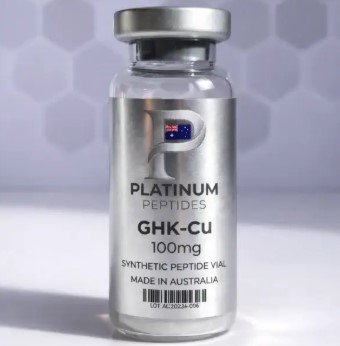
Few research compounds have kept scientists curious for as long as the GHK copper peptide. Found naturally in the human body, the GHK copper peptide is studied in laboratories for what it may reveal about skin, hair and tissue biology.
Peptides have become a major focus of scientific research due to their ability to influence various biological processes. Among the many compounds being investigated, GHK-Cu has attracted significant attention for its potential role in tissue repair, skin biology, and regenerative research. First identified in human plasma in the 1970s, this naturally occurring tripeptide binds with copper ions to form a stable complex known as GHK-Cu. Researchers have continued to study its biological properties because its natural concentration declines with age and it appears to participate in several cellular repair pathways.
The GHK copper peptide is composed of three amino acids—glycine, histidine, and lysine—combined with a copper ion. Unlike synthetic compounds developed solely in laboratories, GHK-Cu naturally exists in the human body and has been extensively studied in laboratory and cosmetic research. Although promising findings exist, many applications remain under investigation, and it is important to distinguish research findings from clinically approved medical uses.
How GHK-Cu Works
GHK-Cu functions as a copper-binding peptide that participates in cellular signalling. Laboratory research suggests that it may influence biological processes associated with tissue maintenance, collagen production, antioxidant activity, and inflammatory responses. Scientists have also examined its ability to regulate gene expression involved in tissue repair and regeneration. These mechanisms continue to be explored through preclinical and limited clinical studies.
Because copper is an essential trace mineral involved in numerous enzymatic reactions, combining it with the GHK peptide creates a complex that has become one of the most researched copper peptides in regenerative science.
Areas of Research
Skin Health and Collagen Production
One of the most widely studied areas involving ghk copper peptide is skin biology. Laboratory and cosmetic research has investigated its role in supporting collagen synthesis, improving skin elasticity, and encouraging tissue remodelling. These properties have contributed to its inclusion in various topical skincare formulations designed to improve the appearance of ageing skin. While studies have reported encouraging findings, outcomes can vary depending on formulation and study design.
Wound Healing Research
Researchers have also explored GHK-Cu for its potential involvement in wound repair. Experimental studies suggest that it may support cellular communication involved in tissue regeneration and healing processes. These observations have generated ongoing interest in its role within regenerative medicine research, although further human studies are needed to establish clinical effectiveness.
Hair and Scalp Research
Another growing area of investigation involves hair follicle biology. Some laboratory and cosmetic studies have examined whether GHK-Cu may help support healthy hair follicles and scalp tissue by influencing repair-related pathways. Current evidence remains limited, and researchers continue to investigate its long-term potential.
Why Researchers Continue to Study GHK-Cu
Several characteristics make GHK-Cu particularly interesting to researchers:
- Naturally occurs in the human body.
- Copper-binding structure supports biological signalling.
- Investigated for tissue repair mechanisms.
- Studied extensively in skin and wound biology.
- Explored for antioxidant and anti-inflammatory activity.
- Included in numerous cosmetic research formulations.
Its broad range of biological interactions continues to make it one of the most extensively researched peptides within regenerative science.
Factors to Consider When Selecting Research Peptides
Researchers sourcing peptides typically evaluate several quality indicators before making a purchase:
- Certificate of analysis and purity testing.
- Reliable manufacturing standards.
- Stable packaging and storage conditions.
- Transparent product specifications.
- Batch consistency.
High-quality research materials contribute to greater confidence when conducting laboratory investigations.
Storage and Handling
Like many research peptides, GHK-Cu should be stored according to the manufacturer’s recommendations to help preserve stability. Proper temperature control, protection from excessive moisture, and careful handling help maintain product quality throughout storage.
Researchers should always follow the supplier’s guidance regarding preparation, storage, and laboratory handling procedures. Safe handling also extends to disposal — needles, syringes, and broken vials should never go in household trash; follow safe sharps disposal practices instead.
Current Research Limitations
Although GHK-Cu has demonstrated promising activity in laboratory research and cosmetic applications, it is important to recognise that not all proposed uses have been confirmed through large-scale human clinical trials. Regulatory approval varies depending on intended use, and injectable forms are not approved as medicines in many jurisdictions. Researchers continue to investigate its long-term safety, effectiveness, and potential future applications.
How to Use GHK-Cu Products Sensibly
If you are using a cosmetic product that contains GHK-Cu, start by reading the product instructions carefully, because formats and strengths vary. Before using it on your face, do a simple patch test: apply a small amount to a discreet area of skin, such as behind the ear or on the inner arm, and wait as the product directions suggest to see how your skin responds. If you notice persistent irritation, stop using it and take advice if you are concerned.
Once the patch test is out of the way, fit the product into your routine in a simple order. As a general guide, lighter, water-based products are usually applied before heavier creams, and a peptide serum would normally go on clean skin before a moisturiser. Start with less frequent use than the label allows, perhaps on alternate days, and build up gradually only if your skin stays comfortable. Mixing several new active products at once makes it hard to tell what is helping, so introduce one change at a time.
Keeping Expectations Realistic
Patience matters with any product of this kind. Skin changes slowly, so judging a product after a few days is rarely fair. Give a new routine a proper run of weeks, used consistently as directed, before deciding whether it suits you, and take a simple photo in similar light now and then if you want a more honest record than memory. Small, gradual changes are the most you should look for, and no cosmetic product works the same way for everyone.
It also helps to be clear-eyed about what is not yet known. Interest in GHK-Cu is growing, and much of the discussion comes from laboratory and early cosmetic research rather than large, long-term studies in people, so the evidence is still developing. Be wary of any product that promises to cure a condition, reverse ageing or deliver dramatic results quickly. Sensible claims are modest ones, and anyone with a skin condition or a medical concern should talk to a qualified professional rather than relying on a cosmetic product.
Frequently Asked Questions
Why should I patch test first? A patch test on a small, discreet area helps you check how your own skin reacts before you use a new product more widely, and it is a sensible first step with any new cosmetic.
How often should I use it at first? Follow the product label, but start less often than the maximum suggested, build up gradually, and only continue if your skin stays comfortable and free of persistent irritation.
How long before I can judge whether it suits me? Give it weeks of consistent use rather than days, look for small, gradual changes, and remember that the evidence for GHK-Cu is still developing, so modest expectations are sensible.
Conclusion
To grow because of their naturally occurring structure and extensive history in regenerative and cosmetic research. Studies have explored its potential involvement in skin health, collagen production, tissue repair, and cellular signalling, making it one of the most recognised copper peptides in scientific literature. While research continues to evolve, sourcing high-quality materials remains an important consideration for laboratory work. For researchers looking to buy peptides online, choosing reputable suppliers that provide quality assurance, transparent testing, and properly handled research products can help support reliable scientific investigations.
In short, the GHK copper peptide remains a research topic because its natural structure links copper biology with skin, hair and tissue studies. For a reference summary of the compound, the Wikipedia overview of copper peptide GHK-Cu outlines its background. Read in that context, the GHK copper peptide is best understood as an active area of science, not a finished story.