

Cork floors feel warm, soft, and quiet underfoot. Keeping them clean takes a gentle touch. Learning how to clean cork flooring the right way protects the finish. It also stops grit and water from doing slow damage.
The safe method is simple. Sweep often, damp mop lightly, and dry the floor fast. Use a pH-neutral cleaner made for cork or hardwood. Skip steam, soaking water, and harsh chemicals.
This guide walks you through each step. You will learn what to avoid, too. You will also get stain tips, a care schedule, and clear answers.
What Is the Best Cleaner for Cork Floors?
The best cleaner for cork floors is pH-neutral. Look for a cleaner made for cork or sealed hardwood. These products clean without stripping the protective finish.
A few drops of mild dish soap can also work. Use it only if your floor maker allows it. Too much soap leaves a dull film behind. That film then traps dirt and footprints.
You can clean cork floors naturally most days. A microfiber dust mop lifts daily dirt on its own. Save wet cleaning for sticky spots and weekly mopping.
Check the maker’s care guide before trying new products. For example, the cork care guide from iCork Floor stresses soft tools. It also stresses cork-safe, pH-neutral cleaning products.
Sealed vs. Unsealed Cork: Know Your Finish First
Most modern cork floors come pre-finished. Their surface carries a polyurethane or similar seal. That seal blocks spills for a short time. It also makes light damp mopping safe.
Unsealed and wax-finished cork needs extra care. Water can soak into it much faster. Wax finishes need wax-safe products only. Regular floor cleaners can soften or strip wax.
Not sure which finish you have? Place a drop of water on a hidden spot. If the drop beads, the seal is likely intact. If it darkens the cork, the finish may be worn.
Does cork flooring need to be sealed? A sound seal resists stains and moisture far better. Worn areas may need a fresh coat in time. Follow the manufacturer’s advice before recoating any floor.
How to Clean Cork Flooring, Step by Step
Follow this routine for weekly cleaning. It also works after parties or muddy days. Keep your tools soft and your mop barely damp.
Step 1: Remove Grit First
Sweep with a soft-bristle broom. Or vacuum on the hard floor setting. Turn off the beater bar first. Grit acts like sandpaper under shoes and mop pads. Clear corners and edges with a soft brush attachment.
Step 2: Mix a Gentle Solution
Fill a bucket with warm water. Add the cleaner at the dose on the label. More cleaner does not mean more clean. Extra product often leaves sticky residue behind.
Step 3: Wring the Mop Almost Dry
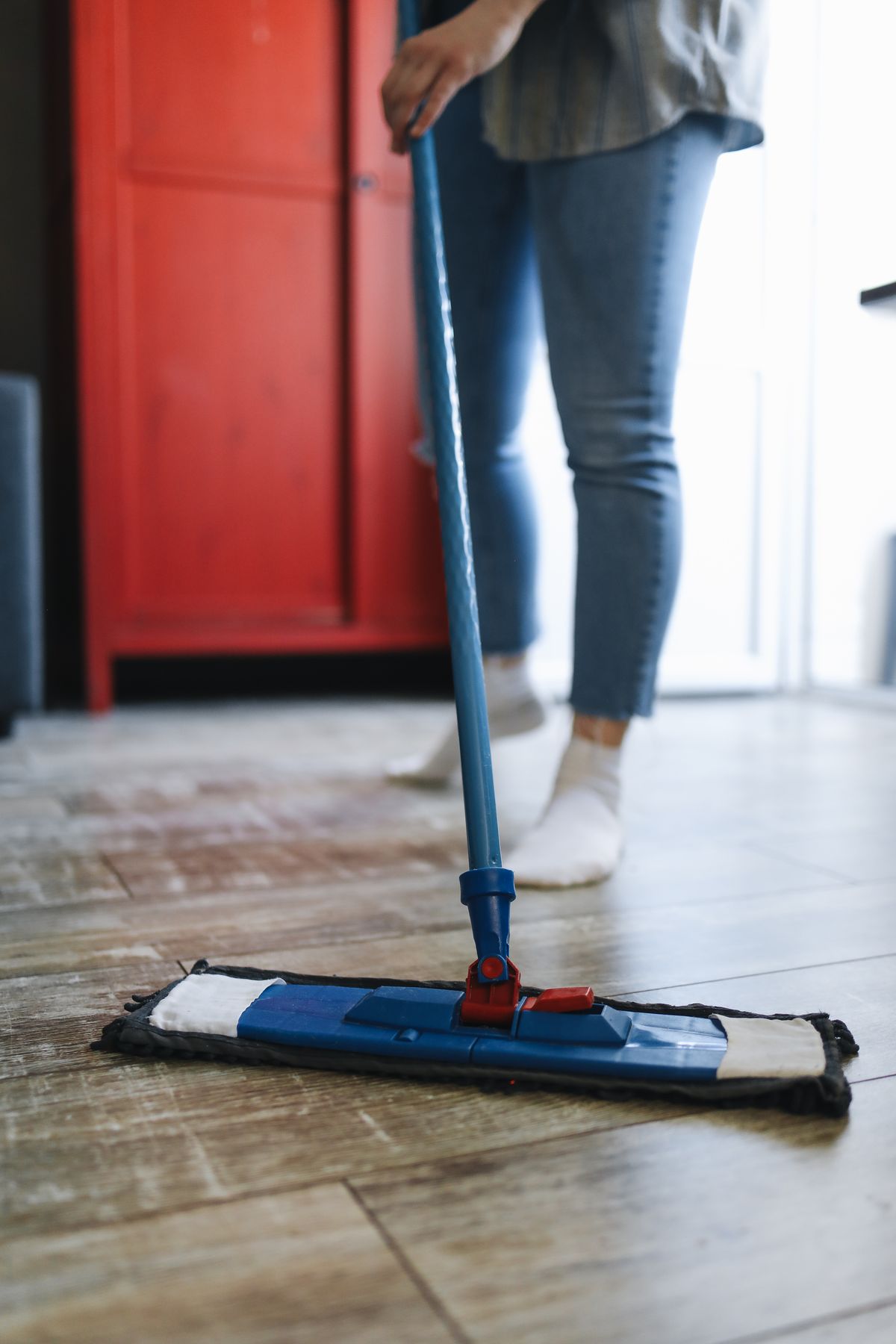
Use a flat microfiber mop. Dip it, then wring it hard. The pad should feel damp, never dripping. If water pools, the mop is far too wet.
Step 4: Mop in Small Sections
Work across the room in small sections. Follow the direction of the tiles or planks. Rinse the pad when it looks dirty. Change the water when it turns cloudy.
Step 5: Rinse Only If Needed
Some cleaners need no rinsing at all. Check the label before you start. If rinsing is needed, use a clean pad. Dampen it with plain water, and wring it well.
Step 6: Dry the Floor Right Away
Buff the floor with a dry microfiber cloth. Or let moving air dry it for a few minutes. Do not leave damp patches sitting on cork. Open a window or run a fan if needed.
That routine is the core of how to clean cork flooring safely. Gentle tools, little water, and fast drying protect it. Cork is also softer and thirstier than hardwood. If you have both, see our guide on how to clean hardwood floors without dulling the finish.
What to Avoid When Cleaning Cork Floors
Knowing how to clean cork flooring also means knowing what to skip. Most cork damage comes from water, heat, or harsh products. Avoid the items below to protect the finish.
Excess Water
Never flood a cork floor. Standing water seeps into seams and joints. It can swell the cork and lift the edges. Always wring the mop until it is barely damp.
What Happens If Cork Flooring Gets Wet?
A quick spill is rarely a disaster. Wipe it up fast and dry the spot well. The risk grows when water sits for a while. Seams can swell, and tiles may warp or stain.
Wet areas can also turn dark over time. Dry the area fully after any leak. Then watch the spot for lifting or swelling.
Steam Mops
Do not use a steam mop on cork. Steam drives moisture deep into seams and joints. Heat can also harm the finish and the adhesive. A damp microfiber mop does the job safely.
Can You Use Vinegar on Cork Floors?
Vinegar is acidic, so it is not pH-neutral. Some older advice suggests diluted vinegar for cork floors. Many makers now warn against it on sealed floors. Acid can dull or weaken the finish over time.
Use vinegar only if your manufacturer allows it. Never make it your default cleaner. A pH-neutral product is the safer everyday choice.
Harsh Chemicals and Scrubbers
Skip bleach, ammonia, and abrasive powders. Avoid oil soaps on polyurethane finishes, too. They can build up, trap dirt, and turn slippery. Also avoid stiff brushes and scouring pads.
Be careful with mats and pads as well. Some rubber-backed mats can discolor cork or trap moisture. Choose non-staining pads and mats instead.
How to Deep Clean Cork Flooring
Deep clean only when routine cleaning falls short. Dull film, sticky patches, or tracked-in grime are clues. Work slowly, and keep the floor nearly dry throughout.
Start with a full dry clean first. Then mop with fresh solution, section by section. Dry each section before you move on. Repeat light passes instead of one very wet pass.
For built-up film, use the maker’s approved cleaner. Follow the dwell time on its label. Never flood the floor to loosen grime. Extra water creates a bigger problem than dirt.
If dullness stays after cleaning, check the finish. Cleaning cannot restore a seal that has worn through. Ask the manufacturer about recoating options for worn areas.
How to Remove Stains From Cork Flooring
Act fast with every spill. Blot the spot, and never rub it. Rubbing spreads the stain and pushes it deeper. Start with plain water and a soft cloth.
For food and drink stains, blot first. Then dab with a cloth dampened with your cleaner. Rinse the spot lightly with a clean, damp cloth. Dry it fully before you walk away.
For greasy marks, use the same gentle method. Blot with a cloth dampened with pH-neutral cleaner. Repeat patiently rather than scrubbing harder. Hard scrubbing can damage the finish around the stain.
For scuffs, rub gently with a soft, dry cloth. Stop if the mark sits within the finish itself. Never sand a sealed floor without expert advice first.
Clean pet accidents at once, too. Blot, clean, rinse lightly, and dry the spot fully. Lingering moisture can stain and swell the cork below.
Some stains sit below the finish. Those need a flooring professional, not stronger chemicals. Stronger products often damage the seal around the stain.
Cork Floor Maintenance Schedule
Good maintenance is mostly small, regular habits. This schedule shows how to maintain cork flooring week by week. Adjust it for pets, kids, and busy entryways.
- Daily, or as needed: Sweep busy areas with a soft broom. Wipe every spill as soon as it happens.
- Weekly: Vacuum or dust mop the whole floor. Damp mop traffic zones with your pH-neutral cleaner.
- Monthly: Damp mop the full floor once. Check felt pads, mats, and door areas for grit.
- Every few months: Inspect seams and edges near sinks. Look for swelling, lifting, or worn finish spots.
- As the maker advises: Recoat worn areas when water stops beading. Ask the manufacturer which product matches your finish.
Felt pads belong under every chair and table leg. Replace pads when they wear thin or collect grit. Mats at entrances trap grit before it spreads. Shake those mats out often to keep them working.
Planning a bigger home project soon? Flooring choices affect long-term care and cleaning habits. Our home renovation guide covers flooring within wider project planning.
Common Problems With Cork Flooring
Most cork floor problems start with water or grit. Knowing them helps you spot trouble early. Watch for the issues below during your monthly checks.
- Swelling at seams: Water sat too long and entered the joints.
- Lifting or curling edges: Repeated wetting can loosen tiles or planks.
- Scratches: Trapped grit grinds into the finish under shoes.
- Dents: Heavy furniture legs can press into soft cork.
- Dull patches: The finish may be worn, or cleaner film remains.
- Dark stains: Old spills or leaks can mark the cork itself.
- Discoloration under mats: Some rubber backings can stain the surface.
Small problems often stay small with fast action. Dry wet areas, add felt pads, and remove grit daily. Large lifting or swelling needs a flooring professional.
Common Cleaning Mistakes to Avoid
Most damage comes from good intentions and bad habits. Avoid these mistakes to keep the finish intact. Each one is easy to fix once you notice it.
- Soaking the mop: A dripping mop is the fastest route to swelling.
- Skipping the dry clean: Mopping over grit grinds it into the finish.
- Using any cleaner on hand: All-purpose sprays are often too harsh for cork.
- Steam cleaning just once: One steam pass can still force in moisture.
- Leaving spills for later: Even short delays let liquid reach the seams.
- Dragging furniture: Lift pieces, or use felt pads under the legs.
- Adding polish without checking: Wax or polish can clash with a polyurethane finish.
When in doubt, choose the gentler option. Use less water, less product, and softer tools. Your floor’s maker is the final word on care.
Frequently Asked Questions
What is the best cleaner for cork floors?
Choose a pH-neutral cleaner made for cork or hardwood. It cleans without stripping the protective finish. Avoid vinegar, bleach, ammonia, and abrasive products. Check your maker’s care guide for approved products.
What is the best way to clean a cork floor?
Sweep or vacuum away grit first. Then damp mop with a well-wrung microfiber mop. Use a pH-neutral solution, and work in sections. Dry the floor right away with a soft cloth.
How can I clean cork floors naturally?
Start with dry methods, like a microfiber dust mop. For wet cleaning, use warm water with an approved cleaner. A few drops of mild soap may suit some floors. Confirm with your manufacturer before using soap.
Can you steam clean cork flooring?
No, do not steam clean cork flooring. Steam forces moisture into seams and joints. It can swell the cork and harm the finish. A barely damp mop is the safe alternative.
What happens if cork flooring gets wet?
A small spill, wiped up fast, rarely causes harm. Water that sits can enter seams and swell cork. It may also stain, warp, or lift the floor. Always dry wet areas fully and quickly.
Does cork flooring need to be sealed?
Most cork floors come with a factory finish. That seal helps the floor resist spills and stains. Unsealed or worn cork benefits from a suitable seal. Follow the manufacturer’s product and timing advice.
How often should you clean cork floors?
Sweep busy areas daily, or as needed. Damp mop weekly in traffic zones. Give the whole floor a monthly damp mop. Inspect seams, pads, and mats every few months.