
How to Fix Flickering Lights: Start With the Bulb, Stop at the Wiring


To fix flickering lights, start with the pattern. If only one light flickers, turn it off, let the bulb cool, tighten it, and try a known-good bulb. If lights flicker only when dimmed, check that the bulb is dimmable and the dimmer is rated for LED bulbs. If several lights flicker together, brighten on their own, buzz, or dip every time a large appliance starts, stop troubleshooting the bulb. That pattern points to a loose connection, an overloaded circuit, or a panel or service problem, and a licensed electrician should inspect it. Those wider patterns can involve arcing and overheating, so they are not a trial-and-error job.
Why Do Lights Flicker?
Lights flicker because the voltage reaching the bulb keeps changing, or because the bulb itself cannot hold a steady output. A loose bulb makes intermittent contact, so power cuts in and out. A failing LED driver does something similar inside the bulb. A dimmer that does not match the bulb sends it a signal it cannot use cleanly, especially at low brightness.
Changes from the circuit look different. A motor starting up draws a short burst of extra current and briefly pulls voltage down. A loose wire connection goes further, breaking and remaking contact in a way that can produce heat and arcing. So do not ask only how to fix flickering lights. Ask where the interruption sits: in the bulb, in the control, in the circuit load, or in a connection. Only the first two belong on a homeowner checklist.
Read the Pattern First
Only one light flickers
This points first to that bulb, its socket, or that one fixture. Other lights on the same circuit staying steady suggests the circuit is delivering power normally.
One room or several fixtures flicker together
Fixtures sharing a switch, dimmer, or circuit and flickering in step point past any single bulb. Look at the shared control first. If the flicker comes with buzzing, a warm switch plate, or a smell, treat it as a wiring issue and skip to the warning signs below.
The whole house flickers
Whole-house flicker is never a bulb problem. It can come from a loose main connection, a problem at the meter or service entry, a failing panel, or a utility-side fault. If neighbours see it at the same time, the utility supply is a strong suspect. If only your house is affected, an electrician needs to check the service and panel connections. Do not open the panel yourself. Flicker that worsens in wind points to a loose connection where power enters the house.
Fix 1: A Loose or Failing Bulb
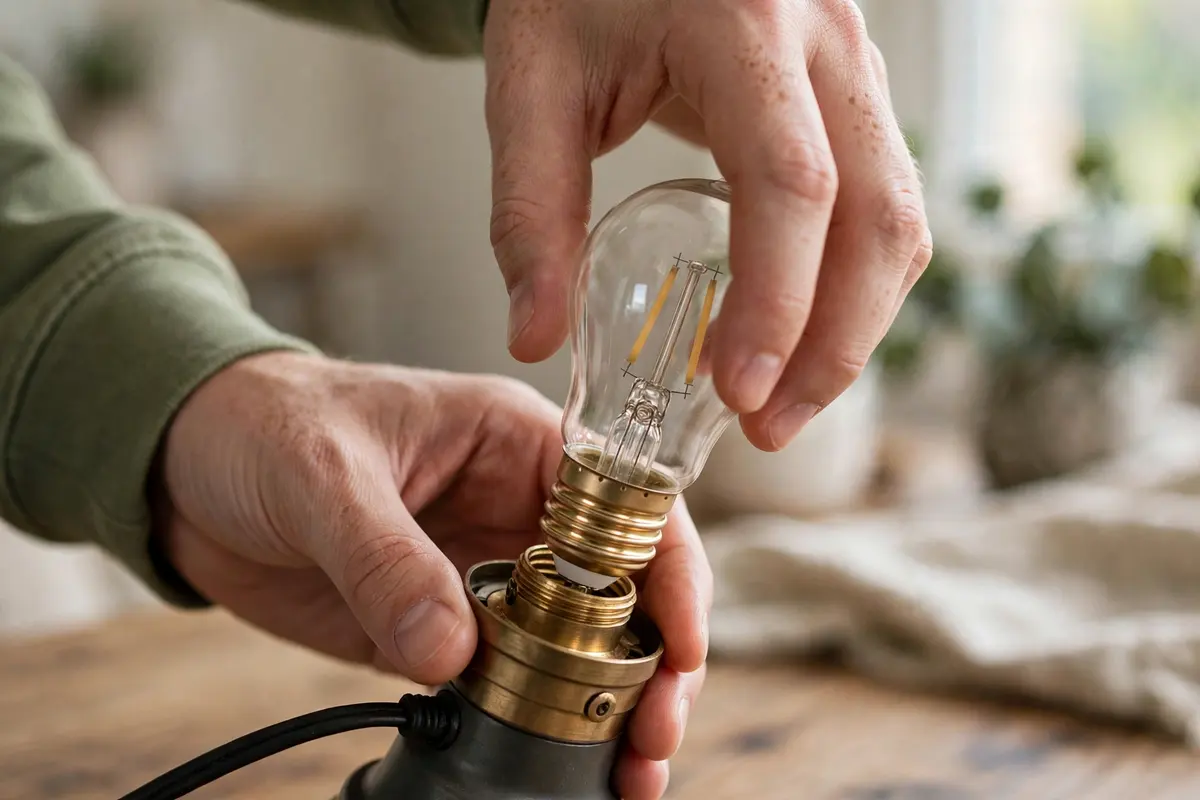
This is the most common cause and the safest place to start. Turn the light off and let the bulb cool fully. Screw-in bulbs loosen over time from vibration and heat cycles, and a slightly loose bulb flickers as contact comes and goes. Tighten it firmly by hand, without forcing it.
If it still flickers, swap in a bulb you know works from another lamp. If the replacement sits steady, the original bulb was failing. LEDs often flicker near the end of their life when the small driver circuit inside them starts to fail, and a cheap or damaged LED can flicker even when fairly new. If both bulbs flicker in the same socket but work fine elsewhere, the problem is the socket or fixture, not the bulbs.
Fix 2: A Worn Socket Contact
Inside a screw-in socket, a small metal tab at the bottom presses against the base of the bulb. After years of bulb changes, that tab can flatten so it no longer makes firm contact. The result feels like a loose bulb: flicker that returns even with a new bulb.
Any work inside a socket should only happen with the power off at the breaker, and even then, most homeowners are better off having the socket or fixture repaired rather than bending parts inside it. If the socket looks scorched, cracked, or loose, do not try to revive it. A damaged socket needs replacement, and on some older fixtures the fixture itself gets replaced instead. Heat-damaged fixture wiring is also a stop point.
Fix 3: Dimmer and LED Mismatch
If your light behaves at full brightness but flickers, strobes, buzzes, or drops out when dimmed, suspect the pairing before the wiring. Older dimmers were built for incandescent bulbs, which draw far more power. LEDs draw very little, and an old dimmer often cannot regulate that small load cleanly, so the bulb flickers, most often at low settings. A non-dimmable LED on a dimmer causes the same problem.
Check two labels. The bulb should say dimmable, and the dimmer should be rated for LED use. The lasting fix is usually a matched pair: a dimmable LED on an LED-rated dimmer. Replacing a dimmer involves wiring inside the switch box, so hire an electrician unless you are qualified and the power is isolated and tested.
Never put a non-dimmable compact fluorescent bulb on a dimmer. That combination has been linked to overheating, so check any CFL on a dimmer circuit and replace it with a suitable LED.
Why Do Lights Flicker When the AC Turns On?
A brief, slight dim at the exact moment the air conditioner starts is common, and on its own it is usually not a fault. An AC compressor is a large motor, and starting a motor from a standstill takes a short surge of current, often called inrush current, several times higher than the current it uses once running. For a fraction of a second, that surge pulls voltage down across the home’s electrical system, so lights dim or flicker once, then return to normal. The same can happen when a refrigerator, washing machine, or power tool starts, especially on a shared circuit.
When AC flicker is not normal
Treat AC-linked flicker as a problem if lights lose much of their brightness, flicker for the whole time the AC runs, get worse over weeks, or dip in several rooms at once. Breakers tripping at startup, crackling sounds, hot breakers, or a burning smell raise the urgency further.
Those patterns suggest a loose connection between the panel and the unit, an overloaded or undersized circuit, a compressor struggling to start, or a panel that cannot handle the load. A loose connection is the one to respect most, because it can heat up under load. Have an electrician check the connections and circuit size, and do not keep resetting a tripping breaker to keep the AC running.
Lights that dim when a microwave, space heater, or hair dryer runs point to a circuit near its limit. Spreading loads across circuits can confirm the pattern, but it does not fix an undersized setup. Never fit a larger breaker to solve it, since breakers are sized to protect the wiring in the wall.
The Dangerous Causes: Loose Wiring and Arcing
These causes look like ordinary flicker at first. A loose connection at a switch, outlet, junction box, fixture, or breaker makes power jump a small gap instead of flowing through solid contact. That jumping is arcing. Arcing produces intense heat at a tiny point, damages the contact further, and can ignite nearby material. It often gets worse, because each arc loosens the connection more.
Signs that point to loose wiring or arcing rather than a bulb include:
- Flicker in several rooms, or flicker with no clear appliance trigger
- Buzzing, crackling, sizzling, or popping from a switch, outlet, or panel
- A burning or melting-plastic smell near a fixture, outlet, or the panel
- Warm or hot switch plates, outlets, or breakers
- Scorch marks or discolouration around an outlet or switch
- Lights that suddenly get brighter as well as dimmer, which can point to a loose neutral connection
- Breakers that trip repeatedly, or flicker that survives new bulbs and a compatible dimmer
If you notice a burning smell, heat, scorching, or sounds from the panel, turn off the affected circuit at the breaker if you can do so safely and call an electrician promptly. Do not open outlet boxes, switch boxes, or the panel to hunt for the loose wire yourself, and do not keep using a hot or noisy outlet while you wait.
When the Panel Is the Problem
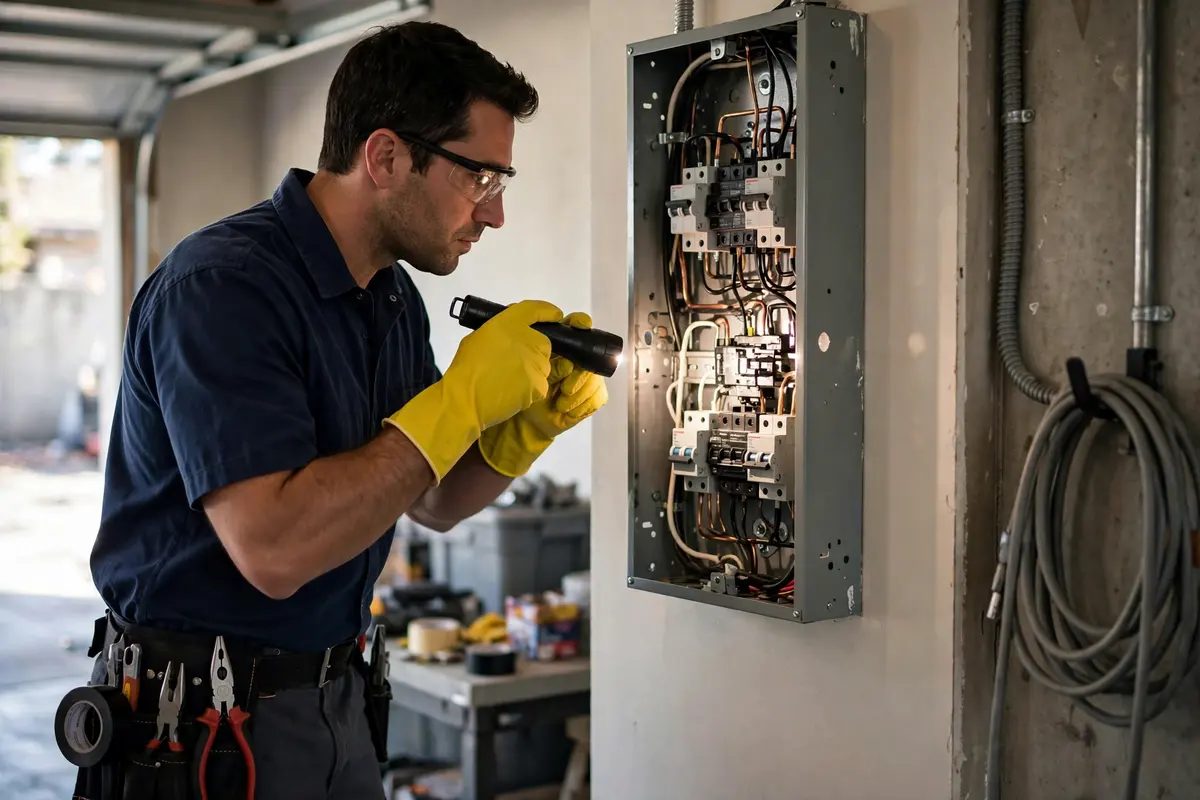
Panel faults tend to show up widely: flicker across multiple rooms, breakers that run warm or trip often, buzzing from the panel, or discolouration on breakers. An older panel can also struggle as a home adds loads it was never planned for, such as an EV charger or a larger AC system.
Panel work is strictly electrician work. Parts inside a panel stay live even with individual breakers off, so there is no safe homeowner version of tightening things inside it. If an electrician finds loose connections, heat damage, or a panel that is genuinely undersized or failing, repair or replacement follows from what they find. For a plain-language look at the warning signs and what an upgrade involves, see this guide to the signs your home needs an electrical panel upgrade. Do not assume flicker alone means a new panel. Often the fault is a single connection, and a good electrician tests before recommending larger work.
A Safe Troubleshooting Order
Work through these steps in order, and stop as soon as the evidence points past the bulb.
- Write down the pattern: which lights, which rooms, what was running, any sounds, smells, or heat.
- Turn off, cool, and tighten the bulb. Try a known-good, correct-type bulb.
- If the light is dimmed, confirm the bulb is dimmable and test at full brightness.
- Test the same bulb in a different, plain on-off fixture.
- Note any link to the AC or another motor starting, and whether the dip lasts a split second or continues.
- Check whether neighbours see the same whole-house flicker, which points to the utility supply.
Anything involving connections inside boxes, switches, fixtures, or the panel belongs to an electrician.
What an Electrician Will Check
An electrician will usually start with your pattern notes, then test connections at the fixture, switch, and relevant junction points. They check circuit load, look for a loose neutral, inspect the panel for heat-damaged connections, and test voltage under load, so a dip that only appears when the AC starts still shows up. If the fault sits at the meter or service entry, they can coordinate the utility side.
Expect a diagnosis that names the faulty point, not just a plan to replace parts until the flicker stops. Costs vary too much by fault and region to give a useful figure here, so get the diagnosis in writing before approving larger work. After the fix, keep bulb and dimmer pairings matched, replace flickering bulbs promptly, and watch for new flicker after any electrical change, since it often traces back to that work.
Frequently Asked Questions
Are flickering lights dangerous?
They can be, but not always. A single light flickering from a loose bulb, a dying LED, or a dimmer mismatch is usually a nuisance. Flicker across several rooms, or flicker with buzzing, heat, a burning smell, or scorch marks, can signal loose wiring, arcing, or a loose neutral, which are fire and shock risks. Those patterns need an electrician, not another bulb.
Why do lights flicker in one room only?
One room usually means the cause sits in that room: a loose or failing bulb, a worn socket, the room’s dimmer or switch, or its circuit. Test a known-good bulb first, then check the dimmer pairing. If several fixtures flicker together and bulbs change nothing, the shared control or circuit wiring is the likely source.
Can a bad bulb make other lights flicker?
Generally, no. A bad bulb flickers on its own because the fault is inside that bulb or its contact with one socket. If other lights flicker at the same time, look for something they share instead: a dimmer, a switch, a circuit under load, or a connection problem.
Is it normal for lights to dim when the AC, fridge, or washing machine starts?
Yes, within limits. A slight, brief dip at the moment a large motor starts is common, because the motor draws a surge of current that momentarily lowers voltage. A deep dim, flicker that continues while the appliance runs, or a dip that is getting worse is not normal and should be checked.
Should I call an electrician or the power company for whole-house flickering?
Check whether neighbours are affected at the same time. If they are, report it to your power company, since the fault is likely on the shared supply. If only your home flickers, call a licensed electrician first to check your panel and service connections, and to confirm whether the utility side is involved.
Can flickering lights damage my appliances or electronics?
It can over time. Repeated voltage dips and surges are hard on sensitive electronics, and severe swings from a loose neutral can damage equipment on some circuits. The bigger risk is what the flicker signals in the wiring itself, so persistent flicker is worth fixing rather than tolerating.
Why does my LED light flicker when it is switched off?
A faint glow or flicker while off usually comes from a small amount of current leaking through the switch or dimmer, which a sensitive LED reacts to. A smart switch that draws a little power to stay connected can do the same. It generally points to the switch and bulb combination rather than a wiring fault, unless it comes with buzzing or heat.