

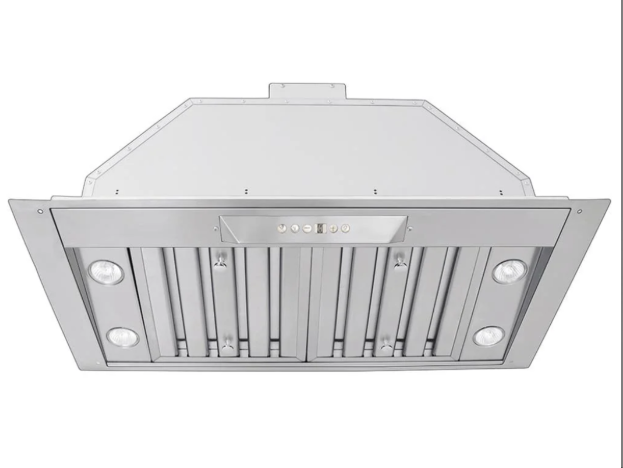
Kitchen ventilation becomes increasingly important as cooking surfaces get wider and more powerful. A properly sized hood can help capture smoke, steam, grease, heat, and cooking odors before they spread through the kitchen. For homeowners with larger ranges or cooktops, choosing the correct hood width and airflow capacity can make a noticeable difference in everyday ventilation.
A 42 inch exhaust hood can be a suitable choice for certain residential kitchens, particularly when the cooking surface is around 36 inches wide. However, selecting a hood should involve more than comparing measurements. Airflow, cooking habits, ductwork, mounting location, hood depth, and the type of appliance beneath it all influence how effectively the system works.
Why Does Hood Width Matter?
The width of a range hood affects its capture area. Smoke, steam, and grease rise from burners and can spread outward before reaching the ventilation system. A hood that extends beyond the cooking surface provides additional coverage around the edges.
For indoor kitchens, current range hood sizing guidance commonly recommends choosing a hood approximately one size wider than the range or cooktop. For example, a 36-inch cooking surface can be paired with a 42-inch hood to create several inches of overhang on either side.
This does not mean that every 36-inch cooktop automatically requires a 42-inch hood. The appliance manufacturer’s recommendations, kitchen layout, hood design, and available space should also be considered.
Is a 42-Inch Hood Suitable for a 36-Inch Range?
In many indoor kitchens, a 42-inch hood can provide useful additional capture area over a 36-inch cooking surface. The extra width allows the hood to extend beyond the edges of the range, which can help contain emissions from burners positioned toward the sides.
Proline’s current sizing guide specifically lists a 42-inch hood as a recommended size for a 36-inch indoor cooktop.
However, homeowners should measure the available cabinet or wall space before purchasing. A wider hood may require modifications if cabinets are positioned closely around the cooking appliance.
The depth of the hood is also important. Adequate front-to-back coverage helps capture emissions from both rear and front burners.
How Much CFM Does a 42-Inch Exhaust Hood Need?
CFM, or cubic feet per minute, describes the volume of air a ventilation system can move. The appropriate CFM depends on more than hood width.
For gas cooking appliances, one commonly used starting calculation is approximately 100 CFM for every 10,000 BTUs of total burner output. For example, a range producing 60,000 BTUs would have a baseline requirement of about 600 CFM under that calculation.
Electric and induction cooktops are generally evaluated differently because they do not produce combustion gases. Width, cooking habits, and the amount of heat and smoke generated can be considered when determining the appropriate airflow.
A 42-inch hood may therefore be available with different airflow capacities. Current 42-inch hood guidance includes models with airflow options from around 600 CFM to 1,200 CFM or more, depending on the configuration.
The objective is to match the ventilation capacity to the cooking appliance and household usage rather than simply selecting the highest possible CFM.
Does Cooking Style Affect Hood Requirements?
Cooking habits can substantially affect ventilation needs. A household that primarily simmers soups or boils water may produce less smoke and grease than one that frequently fries, sears, stir-fries, or cooks with high heat.
High-temperature cooking can create significant amounts of airborne grease and particulate matter. The U.S. Environmental Protection Agency identifies cooking as an important source of indoor particulate matter and recommends using kitchen exhaust when cooking.
If multiple burners are frequently used at the same time, the hood may need greater airflow capacity than a kitchen where only one burner is normally active.
Using the ventilation system consistently is also important. Outdoor-vented hoods should generally be operated while cooking and for a period afterward to continue removing residual pollutants.
What Is a 42 Under-Cabinet Range Hood?
A 42 under cabinet range hood is designed to fit beneath cabinetry positioned above a cooking surface. Unlike a wall-mounted chimney hood, an under-cabinet model integrates into the existing cabinet layout.
This configuration can be useful when homeowners want substantial ventilation without removing upper cabinets or installing a decorative chimney-style hood.
Under-cabinet hoods are available in larger widths, including 42 inches, and can be configured for ducted or, depending on the model, ductless operation. Current under-cabinet options range across several widths and can include high-airflow systems designed for larger cooking surfaces.
Before selecting one, homeowners should verify cabinet dimensions, hood depth, duct location, electrical requirements, and the required clearance above the cooking appliance.
Ducted or Ductless: Which Is Better?
A ducted ventilation system carries cooking air through a duct and exhausts it outside. This approach physically removes air containing smoke, grease, moisture, and odors from the kitchen.
Ductless systems instead pass air through filters and return it to the room. They can be useful when an exterior duct route is unavailable, but they do not remove kitchen air from the home.
For kitchens with frequent high-heat cooking, outdoor exhaust can be particularly useful. The EPA recommends using a range hood that vents outdoors when possible because it can help remove cooking-related pollutants rather than simply recirculating filtered air.
Homeowners should determine whether an exterior duct route is practical before deciding between the two configurations.
Why Is Ductwork Important?
A hood’s advertised CFM does not tell the entire story. The duct system must also be capable of moving the required volume of air.
Long duct runs, undersized ducts, and numerous bends can increase resistance and reduce effective airflow. Proper duct sizing and an efficient route can therefore be just as important as selecting an appropriately powered fan.
Current range hood guidance recommends considering duct length, duct diameter, and the number of elbows when determining ventilation requirements.
When planning a new installation, homeowners should determine where the duct will travel and where it will terminate outdoors before finalizing cabinet or hood placement.
What Clearance Is Needed Above the Range?
The hood must be installed at an appropriate height above the cooking surface. Installing it too low may interfere with cooking and potentially create safety concerns, while installing it too high can reduce capture effectiveness.
The exact clearance depends on the hood and cooking appliance. Manufacturer instructions should therefore be followed rather than relying on a universal measurement.
For an under-cabinet installation, cabinet height and depth must also be checked carefully. The available space needs to accommodate the hood without compromising required clearance.
What Features Should You Compare?
When comparing a 42 inch exhaust hood, consider more than its width and maximum CFM.
Important specifications include:
- Maximum and variable airflow
- Fan-speed settings
- Duct diameter
- Hood depth
- Filter design
- Noise level
- Lighting
- Ducted or ductless configuration
- Installation clearance
- Electrical requirements
- Maintenance requirements
Multiple fan speeds can provide flexibility because everyday cooking does not always require maximum ventilation. Lower settings may be sufficient for simmering, while higher settings can be useful during frying or searing.
Filter design is also important because grease accumulation is a normal part of cooking. Easily removable and cleanable filters can simplify routine maintenance.
How Should a Range Hood Be Maintained?
Regular maintenance helps preserve ventilation performance. Grease filters should be cleaned according to the manufacturer’s instructions, particularly in kitchens where frying and high-temperature cooking are common.
The EPA recommends routinely cleaning cooking surfaces, appliances, and grease filters associated with kitchen ventilation.
Homeowners should also watch for changes in airflow, unusual fan sounds, or visible grease buildup. These signs may indicate that filters need cleaning or that the ventilation system requires further inspection.
For ducted installations, the exterior exhaust outlet should also remain clear of obstructions.
Conclusion
A 42 inch exhaust hood can be an effective option for a larger residential cooking area, particularly when paired with a 36-inch range or cooktop. Its additional width can provide useful coverage beyond the cooking surface, while appropriate airflow can help manage smoke, grease, heat, and odors. For kitchens that need to retain upper cabinetry, a 42 under cabinet range hood can provide another installation option without requiring a wall-mounted chimney design. The final choice should account for cabinet dimensions, cooking appliance size, CFM requirements, ductwork, clearance, and cooking habits.