
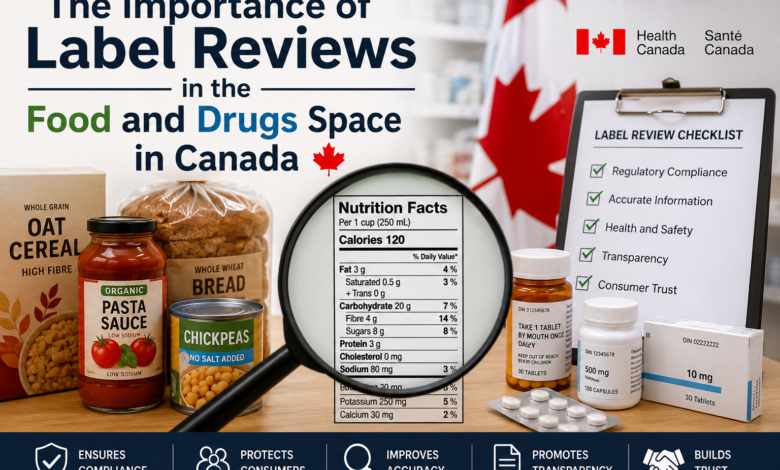
In Canada’s highly regulated marketplace, product labels are much more than marketing tools. Labels are legal documents that communicate critical information to consumers and regulators alike. Whether a business is selling food products, natural health products, cosmetics, medical devices, over-the-counter Food and Drugs, or prescription pharmaceuticals, label compliance plays a vital role in market access, consumer protection, and regulatory compliance.
Unfortunately, many businesses invest heavily in product development, branding, packaging, and marketing, only to encounter costly delays or enforcement issues because of label deficiencies. A thorough label review before launch can help identify compliance concerns early and reduce regulatory risk.
Why Product Labels Matter
Consumers rely on labels to make informed purchasing decisions. Labels communicate important information such as:
- ingredients
- allergens
- directions for use
- warnings and cautions
- nutritional information
- health claims
- product identity
- manufacturer information
Health Canada and the Canadian Food Inspection Agency (CFIA) regulate many aspects of product labelling to ensure that information provided to consumers is accurate, complete, and not misleading.
A deficient label can create both regulatory and commercial problems.
Label Compliance Is a Legal Requirement
Many businesses mistakenly view food and drug label reviews as optional.
In reality, numerous Canadian laws impose mandatory labelling requirements, including:
- Food and Drugs Act
- Food and Drug Regulations
- Safe Food for Canadians Act
- Safe Food for Canadians Regulations
- Natural Health Products Regulations
- Cosmetic Regulations
- Cannabis Act
- Cannabis Regulations
- Consumer Packaging and Labelling Act
Depending on the product category, failure to comply with applicable labelling requirements can result in enforcement action.
Common Label Compliance Issues
Some of the most common problems identified during label reviews include:
- unauthorized health claims
- missing mandatory information
- improper ingredient declarations
- allergen disclosure deficiencies
- misleading marketing statements
- incorrect bilingual labelling
- non-compliant nutrition facts tables
- improper net quantity declarations
- missing warnings and cautionary statements
- inaccurate product classifications
Many of these issues are preventable if identified before products reach the market.
Food Label Reviews
Food products sold in Canada are subject to extensive labelling requirements.
A food label review may assess:
- common name requirements
- ingredient lists
- allergen declarations
- Nutrition Facts Tables
- nutrient content claims
- health claims
- net quantity declarations
- country of origin statements
- bilingual labelling requirements
Food businesses often encounter compliance issues when attempting to use marketing claims that are not permitted under Canadian regulations.
Natural Health Product Label Reviews
Natural health products (NHPs) have unique labelling requirements.
A review may include assessment of:
- Natural Product Number (NPN) requirements
- recommended use statements
- risk information
- medicinal ingredients
- non-medicinal ingredients
- dosage instructions
- health claims
- bilingual requirements
NHP labels must align with the product licence issued by Health Canada in Food and Drugs.
Drug Label Reviews
Drug products are among the most heavily regulated products in Canada.
Drug label reviews may evaluate:
- Drug Facts Tables
- indications
- contraindications
- warnings
- directions for use
- active ingredient declarations
- prescription status requirements
- advertising restrictions
Even minor deficiencies may attract regulatory scrutiny due to the potential health implications.
Cosmetic Label Reviews
Cosmetic products must comply with specific requirements under the Food and Drugs Act and Cosmetic Regulations.
Common review areas include:
- ingredient nomenclature
- mandatory warnings
- bilingual labelling
- product identity statements
- cosmetic claims
Businesses frequently encounter issues when cosmetic products make claims that may cause regulators to classify them as drugs or natural health products.
Cannabis Label Reviews
Cannabis products are subject to some of Canada’s most restrictive labelling requirements.
Reviews often focus on:
- mandatory cannabis warnings
- THC and CBD declarations
- child-resistant packaging requirements
- prohibited marketing elements
- branding restrictions
- health claim prohibitions
Cannabis label deficiencies can result in significant enforcement consequences.
Label Reviews Help Avoid Costly Enforcement
Regulators possess a wide range of enforcement tools.
Potential consequences of non-compliant labelling may include:
- warning letters
- product seizures
- recalls
- stop-sale actions
- import refusals
- licence impacts
- administrative monetary penalties
- prosecution in serious cases
The cost of redesigning labels after a product launch can far exceed the cost of conducting a proper review beforehand.
Label Reviews Support Faster Product Launches
Many businesses conduct label reviews only after receiving comments from regulators, retailers, distributors, or import authorities.
By reviewing labels before launch, businesses can often:
- reduce launch delays
- avoid redesign costs
- improve retailer acceptance
- support smoother regulatory interactions
- minimize compliance risks
Proactive compliance planning is generally more efficient than reactive correction.
Marketing Claims Require Special Attention
One of the most common areas of concern is product claims.
Claims relating to:
- health benefits
- disease treatment
- disease prevention
- nutritional benefits
- performance enhancement
- therapeutic effects
may be heavily regulated.
Businesses frequently underestimate the extent to which marketing language can trigger regulatory concerns or alter product classification.
Label Reviews Protect Brand Reputation
Consumers increasingly expect transparency and accuracy.
Non-compliant labels can damage consumer confidence and brand credibility.
Proper label on reviews help businesses demonstrate a commitment to:
- consumer safety
- regulatory compliance
- product quality
- responsible marketing
Strong compliance practices can become a competitivewith Food and Drugs advantage in highly regulated industries.
The Value of Professional Label Reviews
Label reviews involve more than simply checking spelling or formatting.
A comprehensive review often considers:
- applicable legislation
- regulatory guidance documents
- enforcement trends
- product classification issues
- marketing claims
- industry-specific requirements
Because requirements vary significantly between product categories, specialized regulatory knowledge is often necessary.
Conclusion
In Canada’s food, drug, natural health product, cosmetic, and cannabis industries, label compliance is a critical component of regulatory success.
A thorough label review can help identify deficiencies before products reach consumers, reduce enforcement risks, support smoother product launches, and strengthen consumer trust.
Whether launching a new product or updating an existing one, investing in proper label review services is often one of the most effective compliance decisions a business can make.
Rules for food and drugs labelling reach almost every product on Canadian shelves. When businesses understand how food and drugs rules apply to their category, reviews go faster and launches go more smoothly. In short, food and drugs compliance is not red tape — it is part of product safety.
That is why label review should be scheduled early, alongside product development rather than after packaging is printed. A short consultation about food and drugs requirements at that stage can prevent redesigns, protect launch dates, and keep retailers confident in the product.