

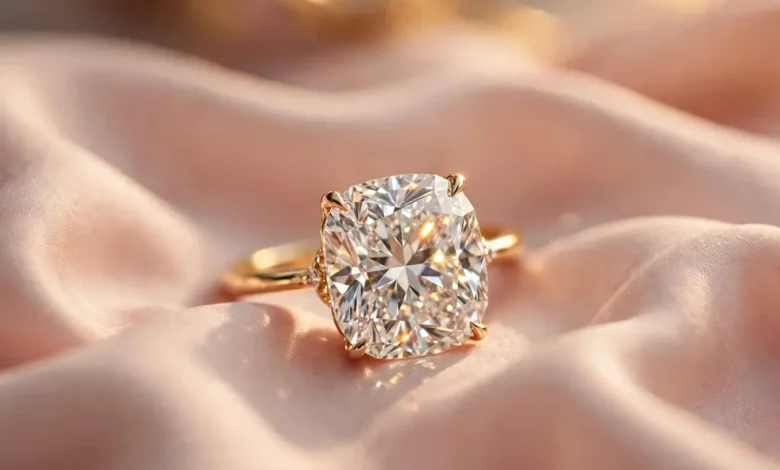

Cushion cut engagement rings feature diamonds with a square or rectangular outline and rounded corners. The shape combines elements of traditional old-style diamond cuts with characteristics of modern brilliant cutting.
The cushion cut has been used in diamond jewelry for well over a century, although its proportions and cutting techniques have evolved considerably.
Today, cushion diamonds are available in different length-to-width ratios, corner shapes, and facet arrangements. These variations mean that two diamonds described as cushion cuts can have noticeably different appearances.
For buyers considering cushion cut engagement rings, understanding these differences can make the selection process more straightforward.
Why Are Cushion Cut Engagement Rings So Popular?
One reason for the popularity of the cushion cut is its combination of softness and structure.
The rounded corners give the diamond a less angular appearance than square or rectangular shapes with sharp corners. At the same time, its broad outline creates a substantial presence on the finger.
Cushion diamonds can also display a range of visual characteristics depending on their cut. Some have a crushed-ice appearance, while others show larger, more defined flashes of light.
The preferred appearance ultimately comes down to personal taste.
What Are the Different Cushion Cut Styles?
Not all cushion diamonds are cut in exactly the same way.
Modern cushion diamonds can generally be divided into different facet patterns and proportions. Some have a more square outline, while others are noticeably rectangular.
The facet arrangement can also influence how the diamond handles light.
A cushion with larger, more distinct facets may produce broader flashes, while a more intricate facet pattern can create numerous smaller reflections.
When comparing diamonds, buyers should look beyond the basic description and examine the individual stone carefully.
How Does Length-to-Width Ratio Affect Appearance?
Length-to-width ratio is particularly important for cushion diamonds.
A ratio close to 1:1 produces a more square appearance. A higher ratio results in a rectangular shape.
Neither is inherently better.
A square cushion can create a balanced, symmetrical appearance, while a rectangular cushion can provide additional finger coverage and a more elongated look.
Personal preference should guide the decision, but it is useful to understand the difference before making a purchase.
Does a Cushion Cut Diamond Sparkle?
Cushion diamonds can display substantial brilliance, although their appearance depends heavily on cut quality.
Unlike round brilliant diamonds, which have standardized proportions and facet arrangements, cushion cuts can vary considerably. This makes evaluating individual stones particularly important.
Factors such as symmetry, proportions, facet pattern, polish, and overall light performance can influence the visual result.
Rather than judging sparkle solely by a grading label or photograph, buyers should examine how the actual diamond interacts with light.
What Should You Look for in a Cushion Diamond?
Several characteristics deserve attention when selecting a cushion diamond.
These include:
- Cut quality
- Length-to-width ratio
- Symmetry
- Polish
- Clarity
- Colour
- Carat weight
- Facet pattern
- Presence of visible inclusions
- Overall light performance
Cushion cuts can sometimes show inclusions differently from other diamond shapes because of their facet arrangements.
Clarity should therefore be evaluated visually rather than automatically selecting the highest available grade.
A diamond that appears clean to the unaided eye may offer better value than one with a significantly higher clarity grade that provides little visible difference.
How Does Colour Affect a Cushion Cut?
Colour can be noticeable in cushion-shaped diamonds because of their larger facets and proportions.
Diamonds are graded on a colour scale ranging from colourless to increasingly noticeable warm tones. The amount of colour that is visible can depend on the diamond’s cut, size, setting, and metal.
A buyer does not necessarily need the highest colour grade to achieve an attractive appearance.
Some people prefer the bright, neutral appearance of a higher colour grade, while others appreciate subtle warmth.
The surrounding metal can also influence how the diamond appears.
Are Cushion Cut Diamonds Durable?
The rounded corners of a cushion cut provide an advantage compared with shapes that have sharp corners.
Corners can be vulnerable to impact, particularly when exposed. The rounded corners of cushion diamonds are generally less susceptible to direct corner damage.
However, diamonds can still chip or become damaged under significant impact.
A secure setting remains important, particularly for rings intended for everyday wear.
Which Settings Work Well With Cushion Diamonds?
Cushion diamonds can be incorporated into numerous engagement ring settings.
Prong settings allow much of the gemstone to remain visible and can emphasize the cushion’s rounded corners. Bezel settings create a protective metal border around the diamond, while halo settings surround the central stone with smaller diamonds.
A solitaire-style design places the focus almost entirely on the central cushion diamond.
The best setting depends on the desired appearance, lifestyle, gemstone proportions, and preferred level of decoration.
Can Cushion Diamonds Be Used in Custom Designs?
Yes. The shape’s versatility makes it suitable for many ring designs.
A custom design can incorporate choices involving the diamond’s dimensions, metal, setting style, band shape, and additional gemstones.
When planning custom diamond rings in Toronto, for example, buyers may want to discuss the desired proportions, setting, lifestyle requirements, and overall design concept before selecting the central stone.
Customization can be especially useful for people who want a ring that differs from standard ready-made designs.
How Does a Cushion Cut Compare With a Round Diamond?
Round brilliant diamonds are known for their highly standardized brilliant-cut design and strong emphasis on light return.
Cushion diamonds have a softer outline and greater variation in facet patterns and proportions.
A round diamond often creates a classic and symmetrical appearance, while a cushion diamond can provide a more distinctive combination of rounded corners and broad surface area.
The choice is primarily aesthetic.
People who prefer traditional brilliance may lean toward round diamonds, while those seeking a softer geometric shape may prefer cushions.
How Does a Cushion Compare With an Emerald Cut?
Emerald cuts are characterized by long, step-cut facets that create broad flashes and a hall-of-mirrors effect.
Cushion cuts typically emphasize brilliance and scintillation differently.
Emerald cuts often reveal clarity characteristics more readily because of their large, open facets. Cushion cuts can provide more visual movement depending on their facet pattern.
This makes the two shapes quite different despite both being available in square or rectangular proportions.
What Ring Setting Is Best for Everyday Wear?
There is no universal answer because everyday wear depends on lifestyle.
People who frequently use their hands may prefer lower-profile designs and secure settings. Those who prioritize maximum gemstone visibility may choose a more open setting.
The height of the ring also matters.
A high-set cushion diamond can create a dramatic appearance but may be more exposed to accidental knocks. A lower-profile design can feel more practical for people who prefer a discreet silhouette.
Comfort should be considered alongside appearance.
How Should You Maintain a Cushion Cut Engagement Ring?
Regular maintenance can help preserve the ring’s appearance.
Dust, oils, lotions, and other residues can accumulate around the setting and reduce the diamond’s visible brilliance.
Gentle cleaning with an appropriate jewelry-cleaning method can help remove everyday buildup. Professional inspection can also identify signs of loose stones or worn prongs before they become serious problems.
People should also avoid exposing jewelry unnecessarily to harsh chemicals or significant physical impact.
What Questions Should You Ask Before Buying?
Before purchasing a cushion diamond, ask for detailed information about the individual stone.
Useful questions include:
- What are the diamond’s exact measurements?
- What is its length-to-width ratio?
- How does it perform under different lighting?
- Is the stone eye-clean?
- What facet pattern does it have?
- Is the symmetry visually appealing?
- What type of setting is recommended?
- How high will the stone sit?
- Is the design suitable for everyday wear?
These questions can provide more useful information than relying solely on carat weight.
Does Carat Weight Determine How Large the Diamond Looks?
Carat weight measures a diamond’s mass, not its visible surface area.
Two diamonds with identical carat weights can have different measurements and therefore appear different in size when viewed from above.
Cushion diamonds can vary substantially in their proportions, so measurements should be considered alongside carat weight.
A well-proportioned diamond can sometimes provide greater visual coverage than another stone with the same weight but different dimensions.
Why Is Proportion Important in Cushion Designs?
Proportion affects both the diamond’s appearance and how it fits within the ring.
A square cushion can create a compact and symmetrical look, whereas an elongated cushion can produce a more slender appearance.
The setting should complement those proportions.
For example, a rectangular cushion may work particularly well in a design that emphasizes its length, while a square cushion can create a balanced centrepiece.
Proportion is therefore a key part of creating a visually cohesive engagement ring.
Conclusion
Cushion cut engagement rings offer a distinctive combination of rounded corners, substantial surface presence, and varied light performance. Because cushion diamonds can differ significantly in proportions and facet patterns, buyers should evaluate individual stones rather than assuming every cushion cut will look the same. For buyers who want greater control over the final design, custom diamond rings in Toronto can provide an opportunity to select individual elements such as gemstone shape, metal, setting, and band design according to personal preferences. Once the ring is chosen, the celebration planning begins — couples can keep the outfit budget in check with pre-loved wedding dresses and round out the day with a professional wedding bar catering service.
In short, cushion cut engagement rings suit buyers who want softness with presence. View cushion cut engagement rings in person under different light, because the facet pattern changes how each stone looks from angle to angle.
For independent background on diamond grading, the Gemological Institute of America explains the 4Cs in plain language. Trying cushion cut engagement rings alongside your planned wedding band is a sensible final check before you buy.
Finally, care for cushion cut engagement rings as you would any fine ring: remove cushion cut engagement rings for heavy work, store them separately, and have the setting checked if it ever feels loose.